



Why Are Silverland Mây’s Rooms Named After Saigon’s Flowers and Plants?
25/08/2026The Silverland Mây room names come from Saigon's own flowers and trees — narra, cassia, khaya, flamboyant, bougainvillaea, green papaya. The story behind each.
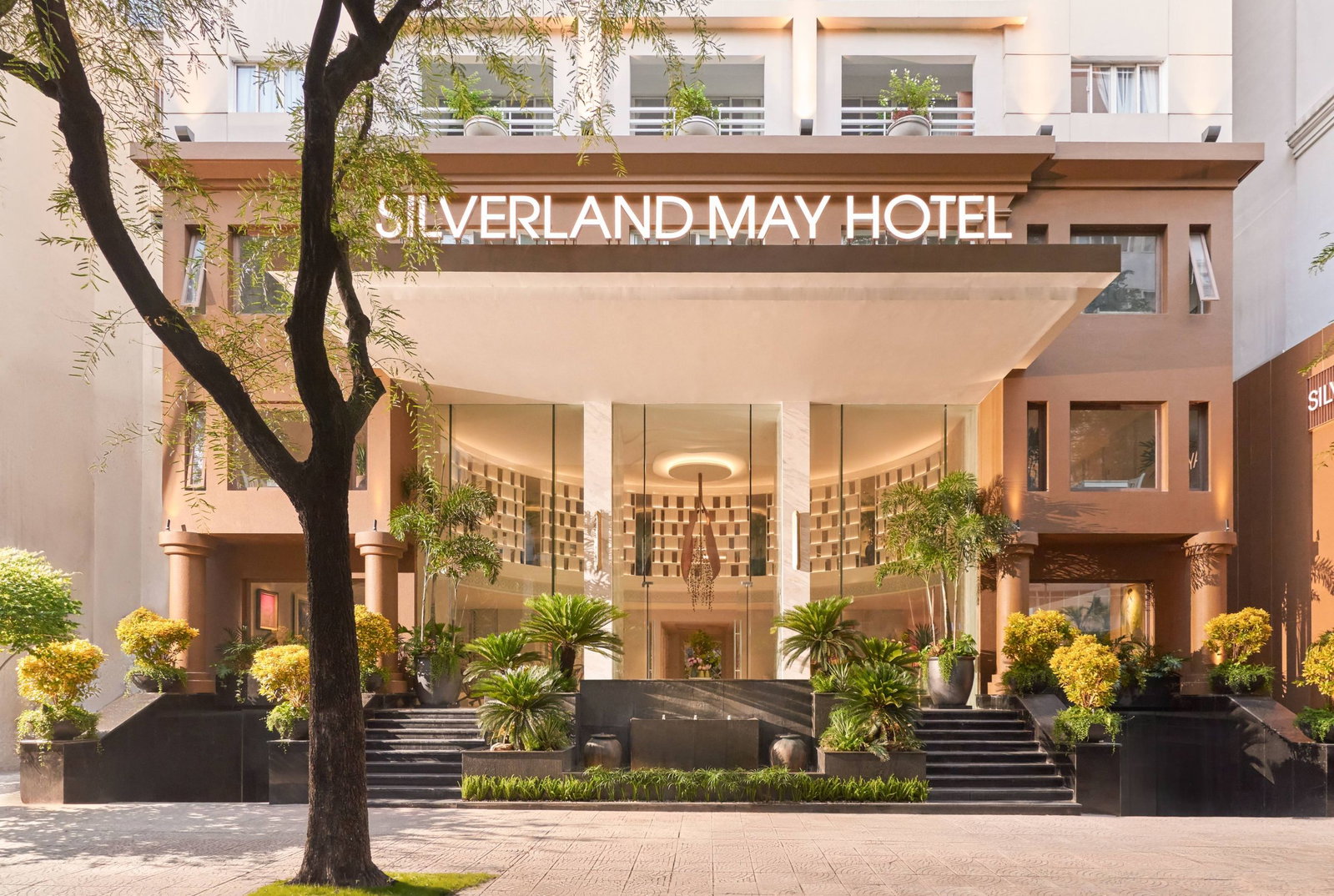
The Silverland Mây room names skip the usual Deluxe–Superior–Premier ladder entirely. Every room category at Silverland Mây — Narra, Cassia, Khaya, Flamboyant, Bougainvillaea, Green Papaya, The Suite Family, The Suite Double — is named after a flower, tree, or plant with a real presence in Vietnamese daily life. The hotel’s own name has the same light touch: Mây means “cloud” in Vietnamese. The room names carry that idea from the lobby into every floor, turning a routine hotel category list into a small, consistent piece of storytelling.
This article looks at where each name comes from, what source material actually confirms versus what’s general botanical and cultural context, and how that naming layer shapes the stay.
The Idea Behind the Silverland Mây Room Names
Downstairs is Gòn Restaurant, and the naming idea carries upstairs into the rooms: every category is named after a different flower, tree, or plant, most common enough that a guest could walk past the real thing on a Saigon street the same afternoon.
It isn’t a decorative flourish added at random. Narra, Cassia, Khaya, Flamboyant, and Bougainvillaea are all recognized common names for actual flowering trees — several of them line the boulevards of District 1 itself — and Green Papaya draws on a plant that shows up in Vietnamese kitchens and gardens daily. Two categories break the pattern by design: The Suite Family and The Suite Double are named for who they’re built for rather than for a plant, marking them as the hotel’s space-first categories within a lineup that’s otherwise built entirely around greenery.
The Silverland Mây Room Names, One by One
Narra — The Fragrant Blossom Behind the Name
In Silverland Mây’s own room descriptions, Narra is said to take its inspiration from a delicate, soft, and unforgettable flower — in the original Vietnamese, hoa giáng hương (“giáng hương blossom”). That detail lines up neatly with the room’s English name: “narra” is the internationally recognized common name for Pterocarpus indicus, the same giáng hương tree, prized across Southeast Asia for fragrant, golden-yellow blossoms that appear in brief, striking flushes rather than year-round. It’s a fitting place to start the list — here, the English room name and the tree that inspired it are literally the same word.
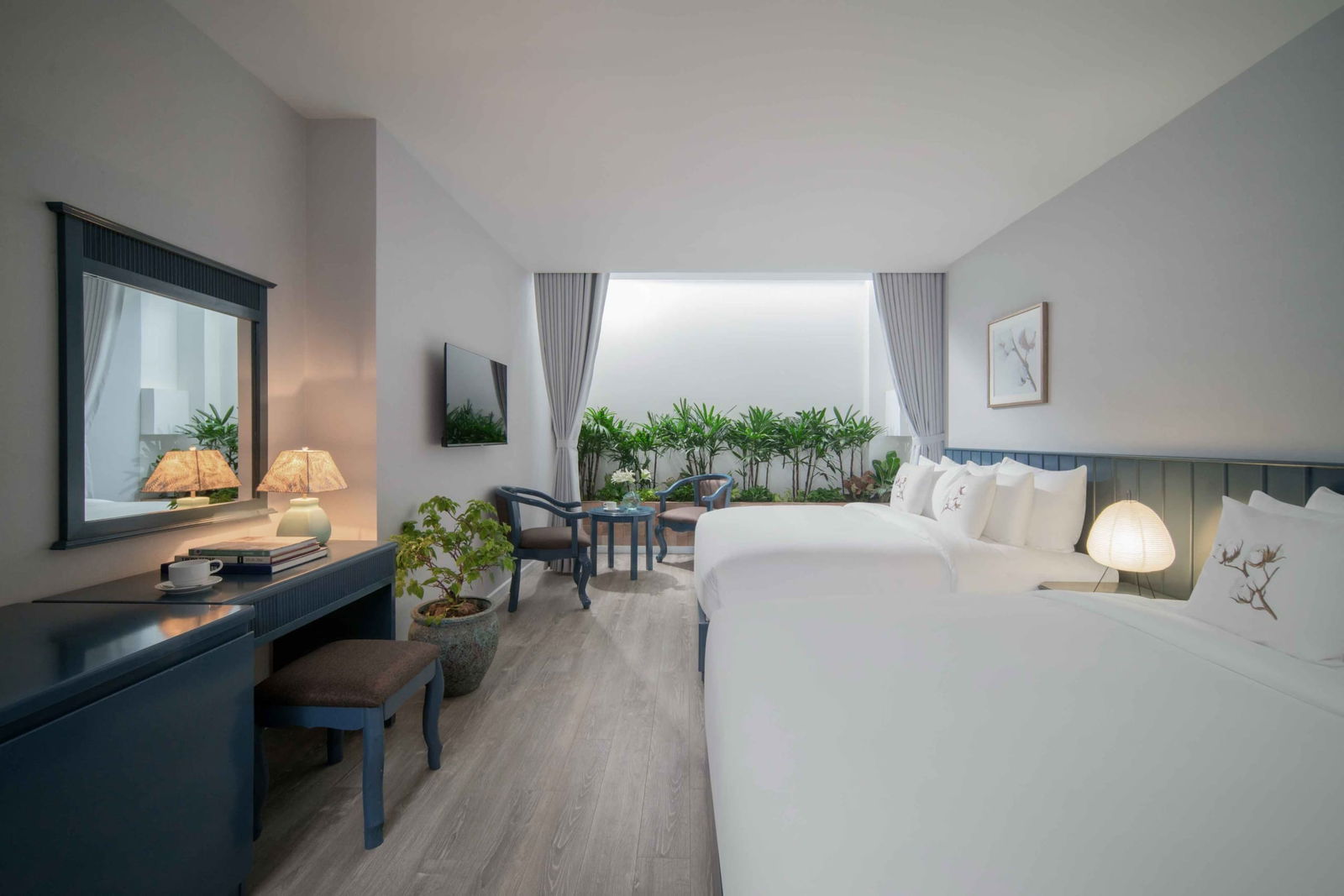
Design-wise, Narra rooms lean into a Saigon-with-French-touches aesthetic — a fitting pairing, since the real giáng hương has long been planted along Vietnamese streets shaped by that same colonial-era layout.
Cassia — Saigon’s Golden-Flowering Trees
Cassia is the genus name for a group of flowering trees known in Vietnam as muồng, several of which are common ornamental and street trees in the south — the golden shower tree (muồng hoàng yến) among the most recognizable, with cascading yellow blossoms that appear in the hotter months. Silverland Mây’s own description of the Cassia room leans into “urban serenity,” pairing warm décor with views of the streets below — a room built to look out at the city rather than shut it out.
Khaya — Saigon’s Shade Trees, Indoors
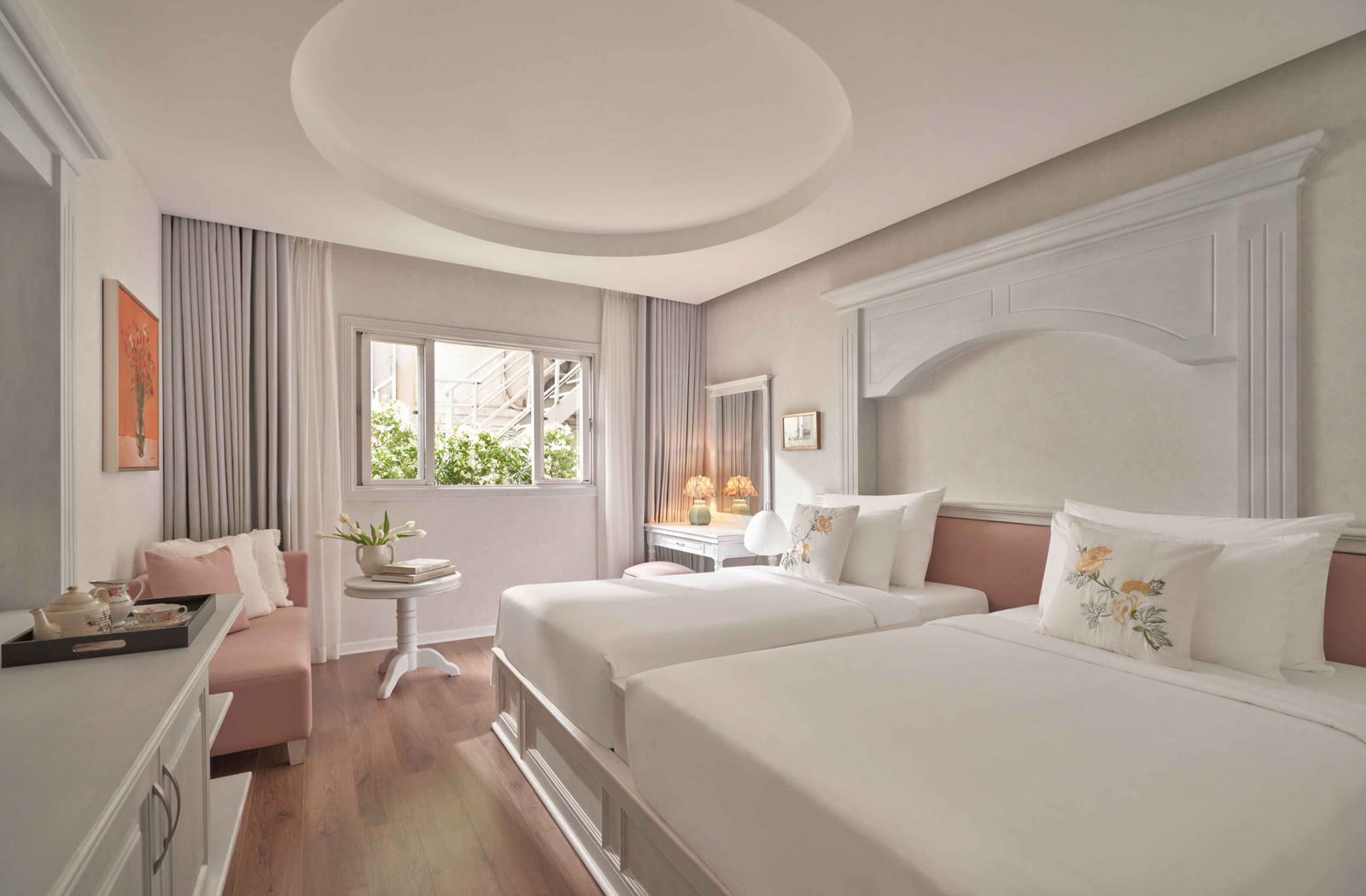
Khaya senegalensis — locally known as xà cừ — is one of the most familiar shade trees lining Saigon’s older boulevards, prized less for showy flowers than for the wide, dense canopy it throws over the street below. The Khaya room follows a similar logic indoors: warm colours, rich wood tones, and a layout built for lingering, with an in-room dining option and a work area added for longer, unhurried stays.
Flamboyant — Saigon’s Most Recognizable Bloom
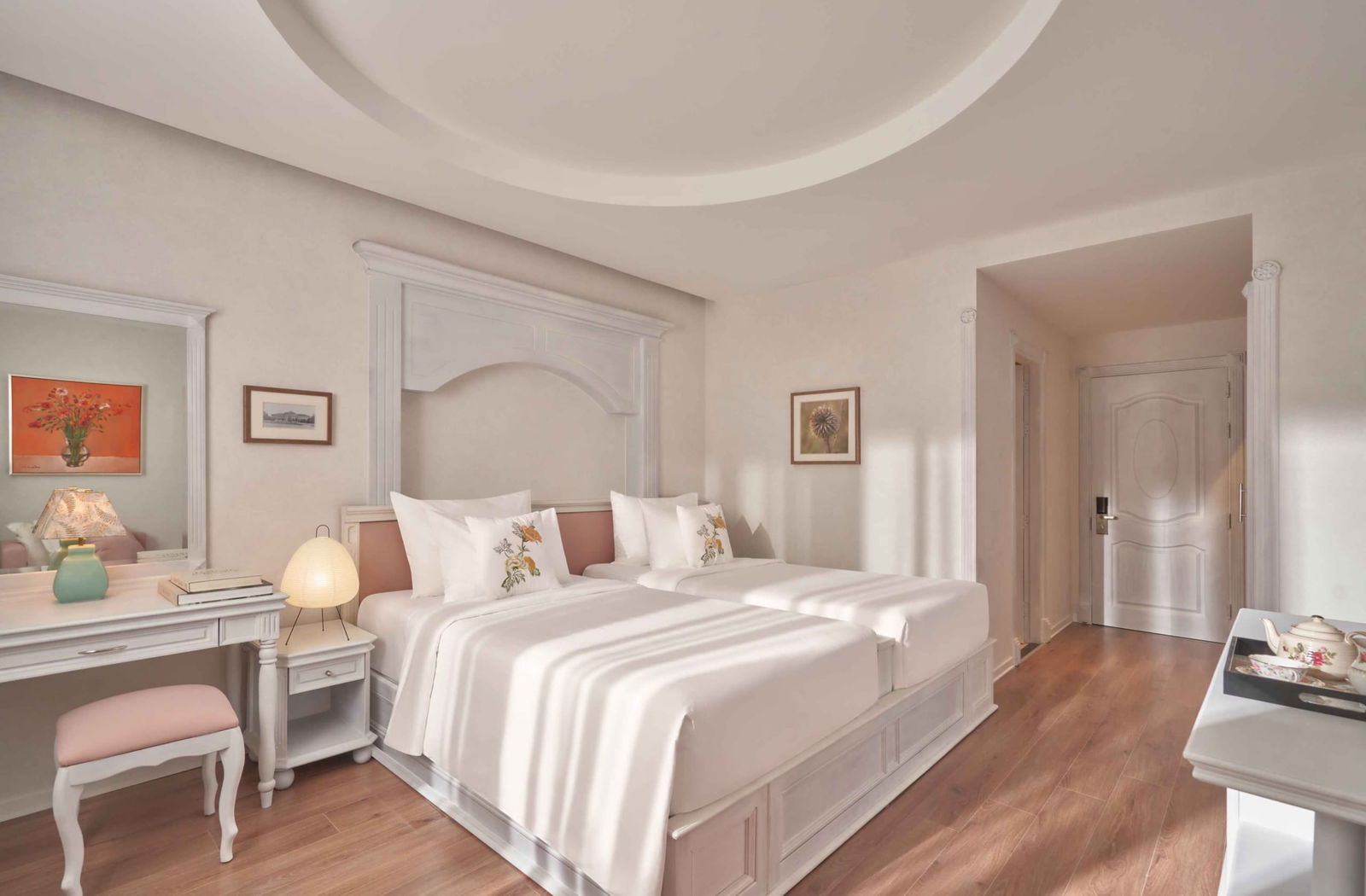
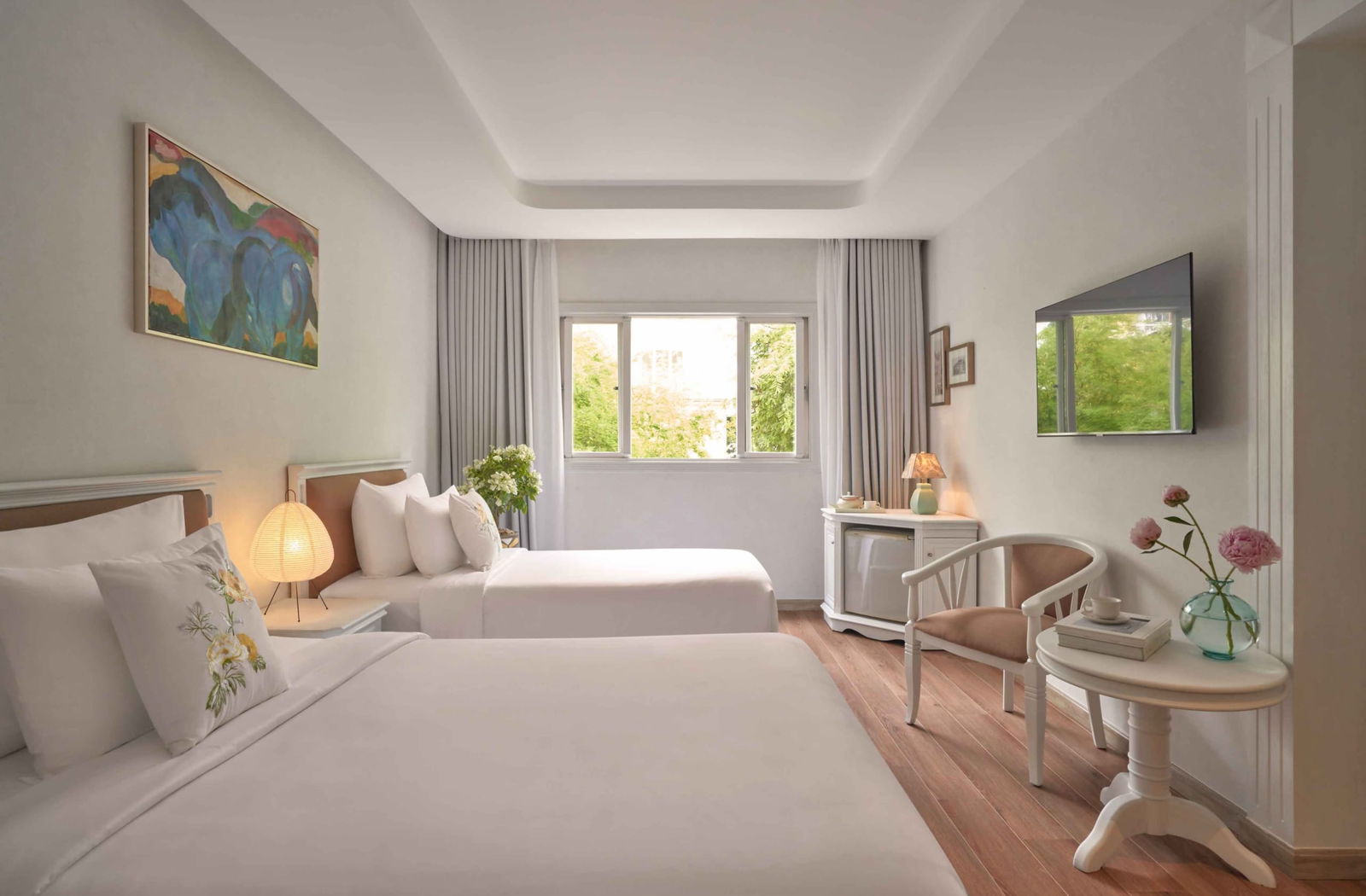
Flamboyant — phượng vĩ in Vietnamese, also called the flame tree or royal poinciana — is arguably the most emotionally loaded flower name on the list for a Vietnamese guest. Its vivid red blossoms appear in early summer and are tied closely to schoolyard memory and the end of the academic year, a piece of everyday nostalgia most Vietnamese visitors will recognize instantly. The room itself is built around that same warmth — a spacious double bed, refined furnishings, and a private seating nook.
Bougainvillaea — The Flower on Every Saigon Balcony
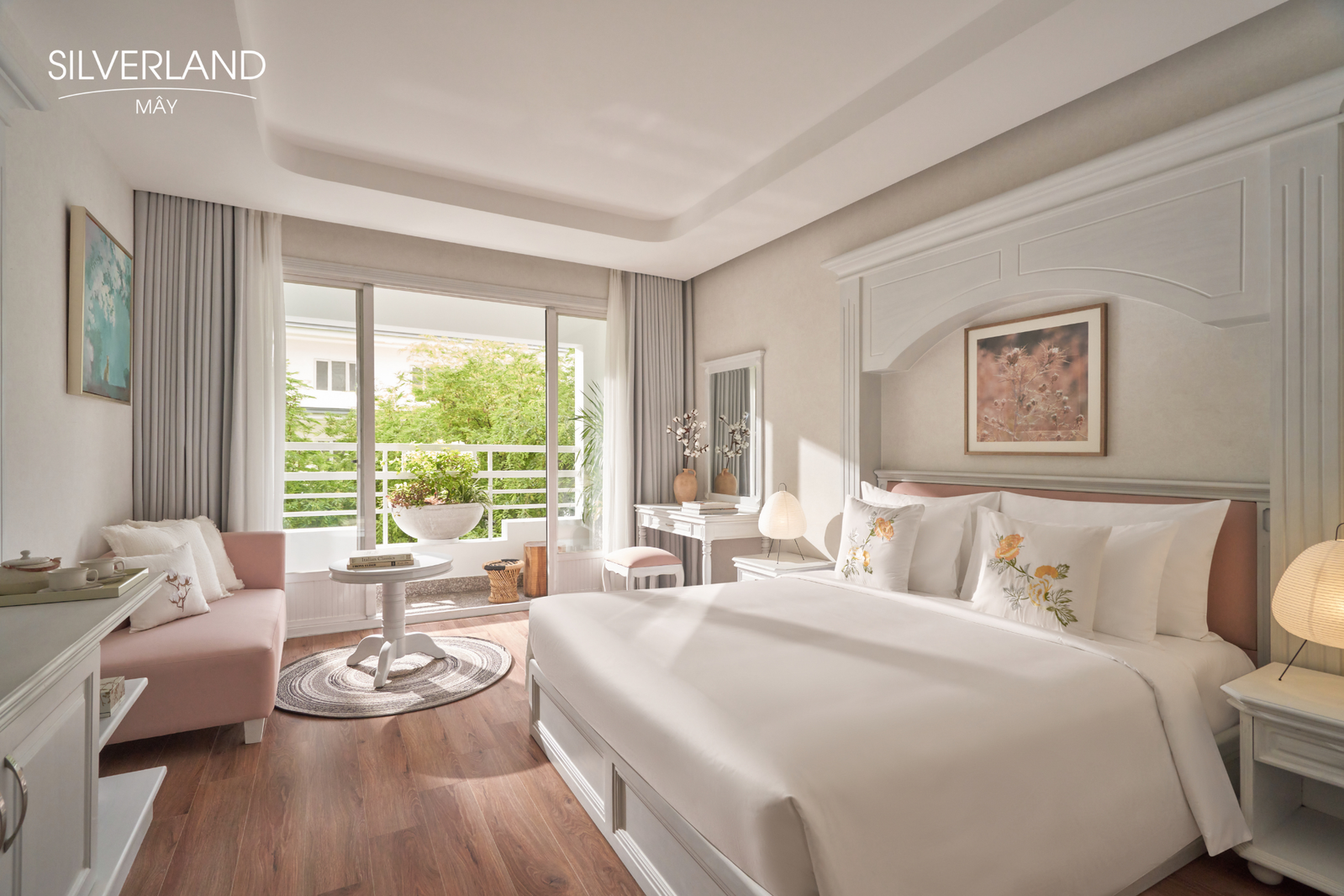
Bougainvillea — hoa giấy, or “paper flower,” in Vietnamese — is one of the most ubiquitous climbing plants in the country, spilling in vivid magenta, purple, and orange bracts over balconies, gates, and garden walls across the city. As Silverland Mây’s top room category, Bougainvillaea Signature carries the name that’s arguably the most visually familiar of the set — fitting for the rooms built specifically with couples and honeymoon stays in mind, each with a private balcony and a freestanding bathtub facing the pool level. For how that balcony fits into a full day at the hotel, see how to spend 24 hours at Silverland Mây.
Green Papaya — Everyday Vietnamese Life, Named Directly
Green Papaya is the one name on the list that isn’t a flower at all — it’s a fruit and plant staple of Vietnamese cooking, most familiar in gỏi đu đủ (green papaya salad) and a fixture of home gardens across the south.
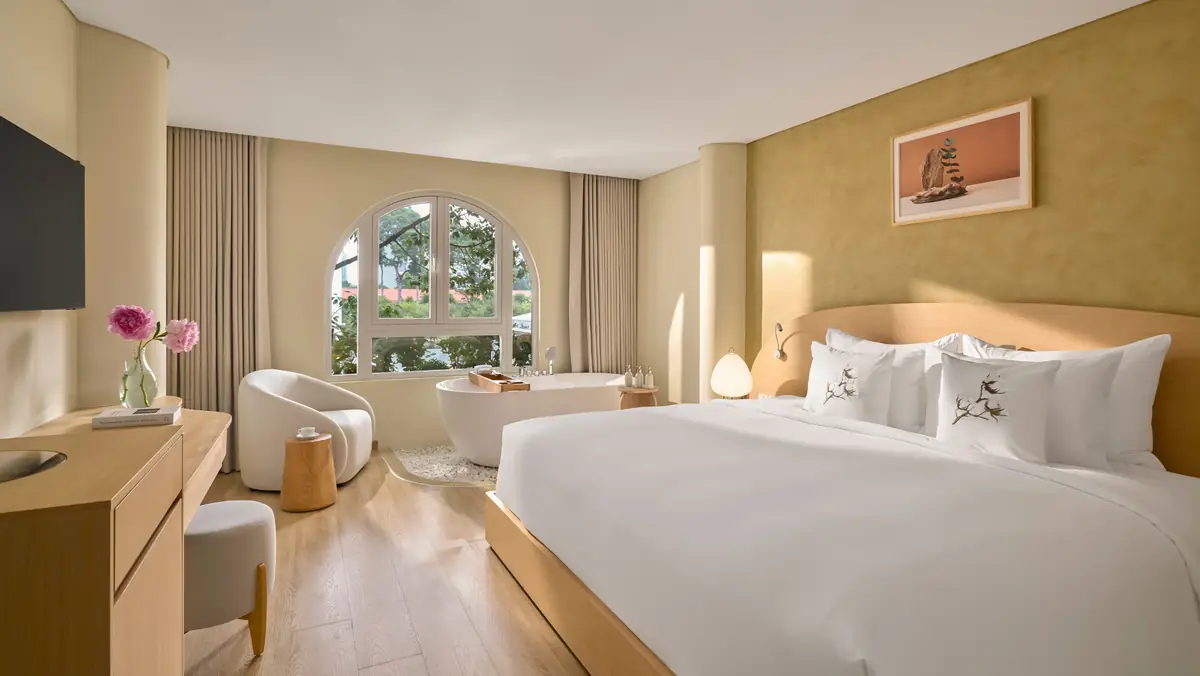
It’s also, for anyone who follows Vietnamese cinema, the title of The Scent of Green Papaya (Mùi Đu Đủ Xanh, 1993) — Tran Anh Hung’s Cannes Camera d’Or-winning, Oscar-nominated film built entirely around the quiet rhythms of a Vietnamese household. Whether or not the name is a deliberate nod to the film, it draws from the same well: green papaya as a symbol of gentle, everyday domestic life rather than grand spectacle. Fittingly, the Green Papaya room is built around a Hollywood Twin layout, calming decoration, and warm wooden textures — comfort at a smaller, more intimate scale.
The Suite Family and The Suite Double — Named for Who Stays There
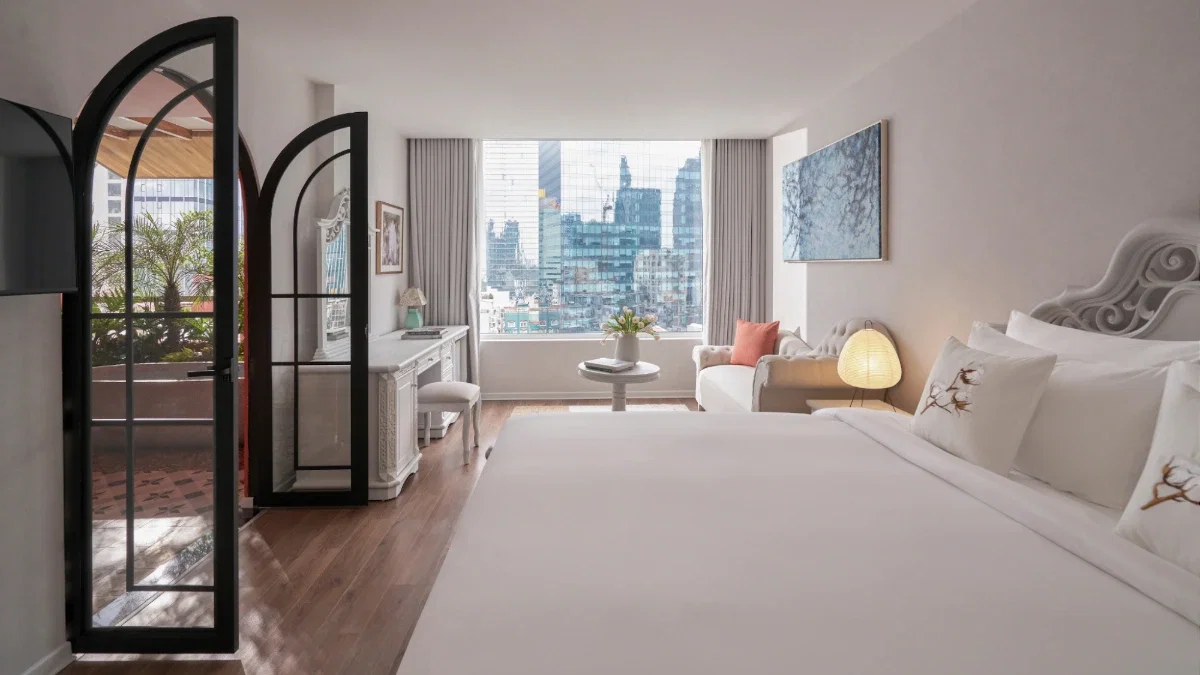
The two Suite categories are the exception to the botanical naming, and that’s likely intentional — The Suite Family and The Suite Double are named for their purpose, not a plant, signalling the two categories built primarily around space rather than atmosphere. The Suite Family pairs a bedroom area with a separate space for shared time, built for families or groups travelling together. The Suite Double offers a larger layout with its own sitting area, following the same warm materials and soft lighting found throughout the hotel.
How the Naming Enriches the Stay
None of this changes what’s in the minibar or how the beds are made, but it does change how a stay reads. A guest checking into “Bougainvillaea” or “Flamboyant” is handed a small piece of Saigon before they’ve even opened the door — a flower on the street outside, a tree shading a nearby boulevard, a fruit on the menu two floors down at Gòn Restaurant. It’s a quieter kind of storytelling than a wall plaque, built into the one thing every guest actually interacts with: the room name on the key card and the door.
It also gives the room lineup a coherence a purely functional system (Deluxe, Superior, Premier) doesn’t offer. Because each name maps to something specific and real, the Silverland Mây room names become memorable in a way that supports the rest of Silverland Mây’s identity: a boutique hotel built on a consistent, unhurried old-Saigon character, the same character explored in Silverland Mây’s rooftop pool and design story.
FAQ
Why are the Silverland Mây room names taken from flowers and plants?
The naming sits alongside the hotel’s own name, Mây, which means “cloud” in Vietnamese. Each room category borrows the name of a flower, tree, or plant with a real presence in Vietnamese life, from the fragrant narra tree to the bougainvillea common on Saigon balconies.
What does the name “Narra” refer to?
Narra is the internationally recognized common name for Pterocarpus indicus — known in Vietnamese as giáng hương — a tree valued for its fragrant, golden-yellow blossoms.
Is “Flamboyant” a real flower?
Yes. Flamboyant, also called the flame tree or royal poinciana (Delonix regia), is known in Vietnamese as phượng vĩ and is strongly associated with early summer and schoolyard memory across Vietnam.
Why is one room called “Green Papaya” instead of a flower name?
Green papaya is a plant and fruit staple of Vietnamese cooking and home gardens rather than a flower, and it’s also the title of the internationally acclaimed 1993 Vietnamese film The Scent of Green Papaya. It fits the same theme of everyday Vietnamese life that runs through the rest of the room names.
Do all of Silverland Mây’s room categories have plant-inspired names?
Most do — Narra, Cassia, Khaya, Flamboyant, Bougainvillaea, and Green Papaya. The two Suite categories, The Suite Family and The Suite Double, are named for who they’re built for instead, marking them as the hotel’s space-focused categories.
Which room is best for couples given this naming story?
Bougainvillaea Signature, the hotel’s top category, is named after one of Vietnam’s most visually familiar flowering plants and is purpose-built for couples and honeymoon stays, with a private balcony and freestanding bathtub.
Silverland Mây Hotel — 28–30 Thi Sách Street, District 1, Ho Chi Minh City. Website: silverlandhotels.com. Part of Silverland Hospitality, an independent Vietnamese boutique hotel group operating 8 properties in District 1 since 2001.
What else?

Yen Rooftop Bar: An Award-Winning Rooftop Bar in District 1
Yen Rooftop Bar, on the roof of Silverland Yen, won Luxury Rooftop View Hotel in South East Asia 2025. Hours,...

What’s Around Silverland Yen: A Walking Guide to District 1’s Museum Quarter
Silverland Yen stands at 73-75 Thu Khoa Huan Street, on a short block in Ben Thanh Ward. Guests book it...

From Central Saigon to Rooftop Calm: A Slow Stay at Silverland Yen
Silverland Yen is a 4-star boutique hotel with 63 rooms at 73-75 Thu Khoa Huan Street, Ben Thanh Ward, Ho...