



Japanese Style Hotel in Ho Chi Minh City: A 2026 Guide
15/07/2026A Japanese style hotel in Ho Chi Minh City means something more specific than “clean and minimalist.” It usually falls into one of two camps: corporate-grade Japanese hospitality standards, the kind Hotel Nikko Saigon built its reputation on since the 1990s, or design-led wabi-sabi boutiques that borrow Japanese aesthetic philosophy, stone gardens, driftwood, negative space, […]
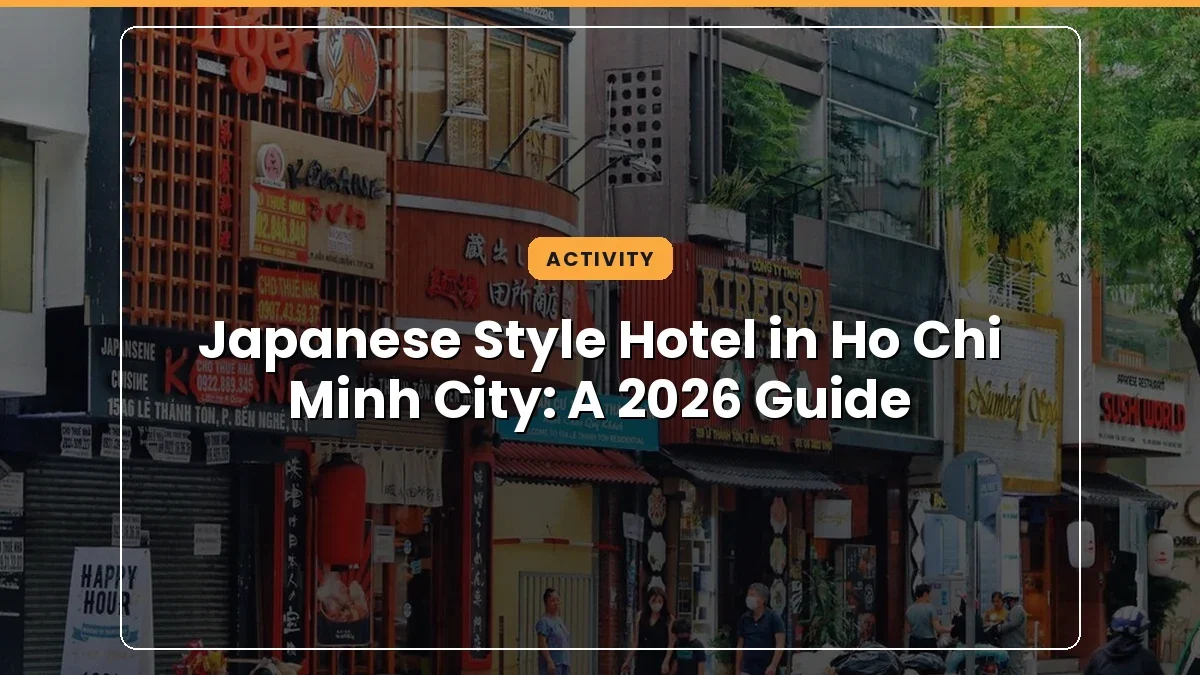
A Japanese style hotel in Ho Chi Minh City means something more specific than “clean and minimalist.” It usually falls into one of two camps: corporate-grade Japanese hospitality standards, the kind Hotel Nikko Saigon built its reputation on since the 1990s, or design-led wabi-sabi boutiques that borrow Japanese aesthetic philosophy, stone gardens, driftwood, negative space, without being run by a Japanese hotel group. Both camps cluster within walking distance of each other in District 1’s Le Thanh Ton and Thai Van Lung corridor, an area locals and expats simply call Little Japan.
This guide breaks down what actually makes a hotel “Japanese style” here, which properties represent each approach, and how to pick between them depending on whether you want Japanese-standard service or Japanese-inspired design.
What “Japanese Style” Actually Means in a Saigon Hotel
Two different things get called Japanese style, and conflating them leads to the wrong booking.
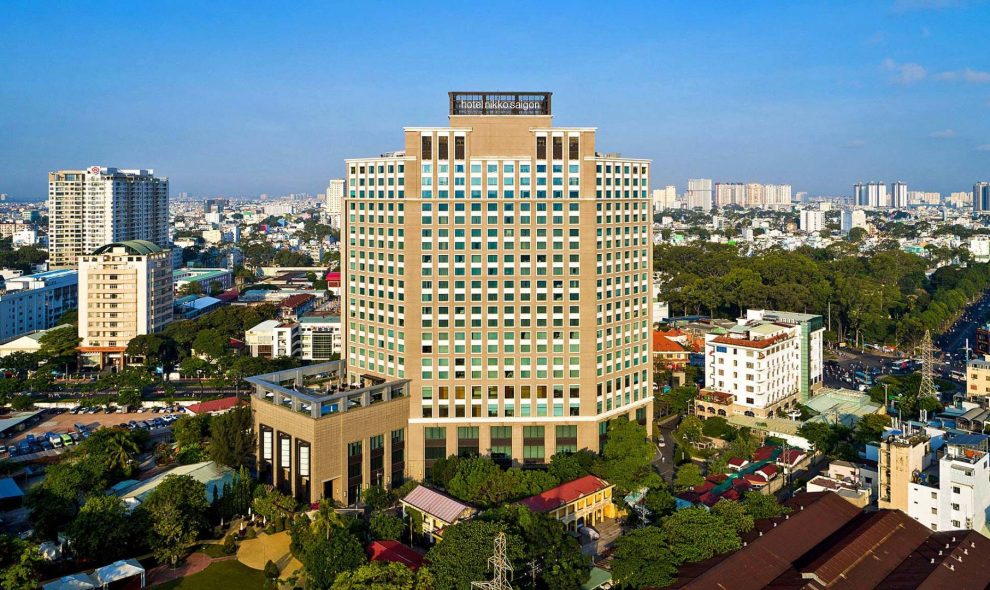
Japanese hospitality standard refers to operational precision: multi-function washlet toilets, rain showers, immaculate housekeeping, quiet air conditioning, and staff trained to Japanese service expectations. Hotel Nikko Saigon, part of the Okura Nikko Hotel Management group, exemplifies this category. Room rates run USD 100-250 a night, and the hotel draws heavily from Northeast Asian business travelers who value consistency over local color.
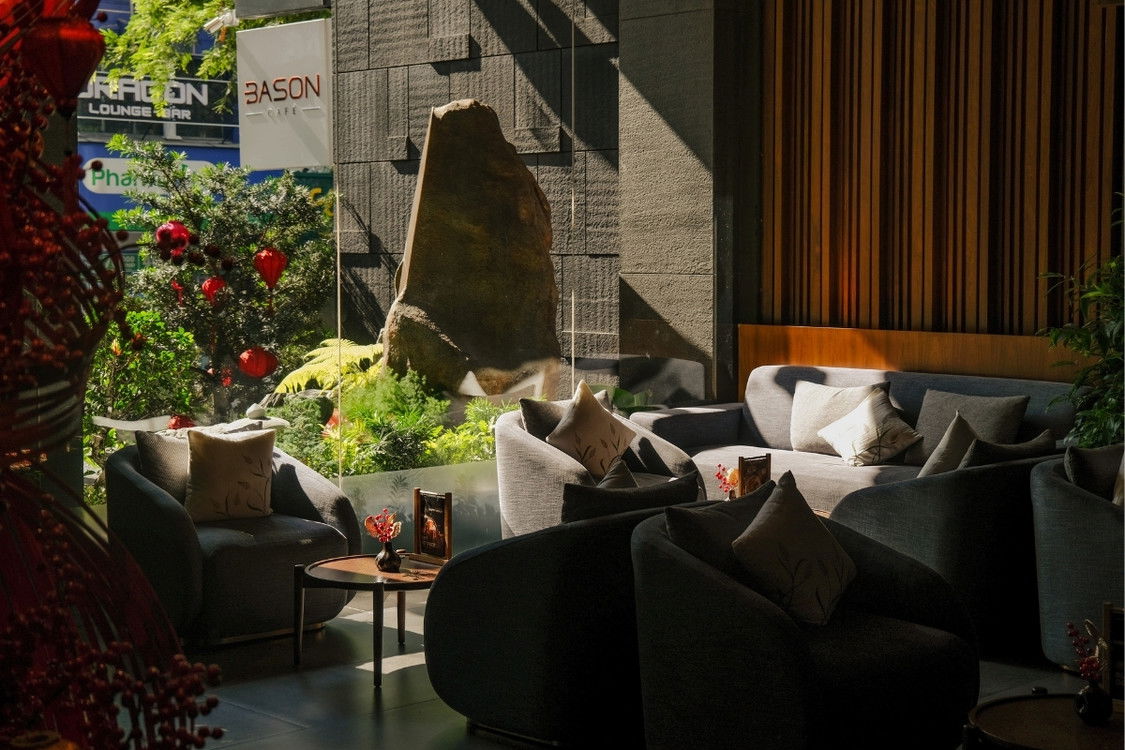
Japanese design philosophy refers to aesthetic choices: wabi-sabi (the appreciation of imperfection and impermanence), karesansui dry gardens, and natural materials like driftwood and raw stone. Silverland Sakyo hotel, a boutique property in the Little Japan district, built its entire identity around this: a lobby water feature meant to evoke “quiet, calm, meditation,” a karesansui dry garden with raked gravel standing in for water, and driftwood installations symbolizing the acceptance of natural aging. The property was recognized as Luxury Concept Hotel in Asia at the World Luxury Hotel Awards 2025, a signal that the design approach reads as more than decorative theming to industry judges.
Neither approach is “more authentic” than the other. A business traveler flying in from Osaka for three nights of meetings likely wants the first. Someone drawn to Kyoto’s temple gardens on a previous trip likely wants the second.
Little Japan Ho Chi Minh City Hotel Options: The District Behind the Category
Saigon’s Little Japan district did not exist as a planned development. It started roughly two decades ago as a handful of Japanese restaurants tucked into Alley 15B off Le Thanh Ton Street, catering to the growing number of Japanese professionals working in HCMC’s manufacturing and finance sectors. Today the district spans about 300 meters along Le Thanh Ton and extends onto Thai Van Lung, Thi Sach, and Ngo Van Nam streets, according to VnExpress International’s reporting on the area. Most travelers searching for a boutique hotel Le Thanh Ton address specifically want to be inside this radius rather than commuting in from elsewhere in the city.
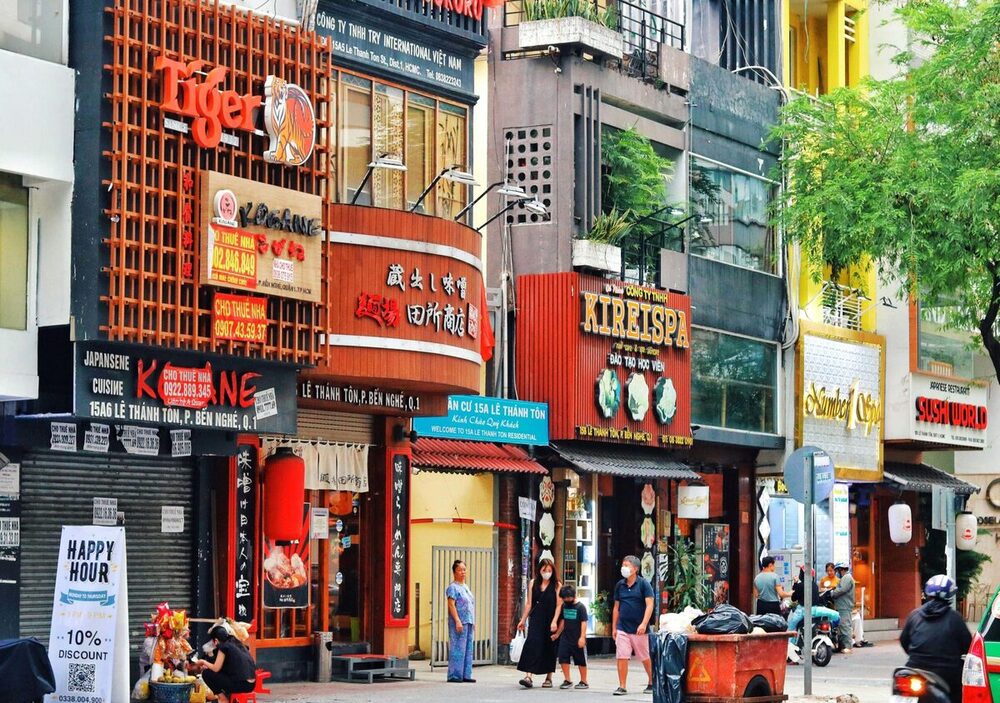
Most restaurants and shops in the enclave are still Japanese-owned, whether by residents or by owners who split time between Saigon and Japan. The practical effect for anyone choosing a Japanese style hotel here: staying within this pocket puts izakayas, Japanese-standard spas, and same-day laundry services within a five-minute walk, versus needing a taxi from elsewhere in District 1.
The neighborhood runs quiet during the day and picks up from 5 p.m. to 1 a.m., when Japanese professionals finish long workdays (often 6 a.m. to 7 or 8 p.m.) and head to dinner locally rather than traveling home first. Daytime hours, by contrast, draw photographers chasing the district’s low-key, distinctly non-touristy Japanese aesthetic.
Comparing the Two Types of Japanese Style Hotel in Ho Chi Minh City
| Feature | Corporate Japanese-standard (e.g., Hotel Nikko Saigon) | Design-led wabi-sabi boutique (e.g., Silverland Sakyo hotel) |
|---|---|---|
| Typical nightly rate | USD 100-250 | Varies by boutique, generally mid-range |
| Room count | Large-format, hundreds of rooms | Smaller, boutique scale (76 rooms at Sakyo) |
| Signature amenity | Washlet toilets, rain showers, Olympic-length pool | Karesansui dry garden, driftwood art, Zen soundscape |
| Best suited for | Business travelers, MICE groups | Design-focused leisure travelers, couples |
| Atmosphere | Efficient, described by reviewers as “corporate” | Meditative, slower-paced |
| Location | Slightly outside core Little Japan cluster | Inside or adjacent to Le Thanh Ton corridor |
What to Actually Look For When Booking
Marketing copy calls a lot of properties “Japanese-inspired,” so it helps to know what to verify before booking.
For the hospitality-standard category, check whether the hotel is operated or affiliated with an established Japanese hospitality group (Nikko, Okura, Sotetsu are the three main names operating in HCMC), since third-party affiliate labeling doesn’t guarantee the same training standards.
For the design category, look past the marketing photos for specifics: does the property name actual design principles (wabi-sabi, karesansui, shibui) or just use the word “Zen” as a catch-all? A genuine wabi-sabi hotel Saigon property spells out specific elements the way Silverland Sakyo hotel is public materials do: driftwood referred to by its Japanese term nagare boku, and a dry garden built around the traditional karesansui rock-and-gravel arrangement rather than a generic water feature. No property in the city markets itself as a true ryokan style hotel Vietnam in the strict Japanese sense, communal onsen bathing and tatami-floored rooms included, since that format doesn’t yet exist commercially in HCMC; what’s on offer here borrows ryokan-adjacent design cues rather than replicating the format wholesale.
A detail worth checking directly with the property: room size. Boutique Japanese-design hotels in this district run smaller than international chain standards, with Silverland Sakyo’s rooms ranging 26 to 36 square meters across its Deluxe, Premier, Executive, and Signature categories. That’s comparable to a well-appointed Tokyo business hotel room, not a resort-scale suite, which fits the aesthetic but surprises travelers expecting more square footage for the price.
FAQ – Japanese Style Hotels in Ho Chi Minh City
What makes a hotel “Japanese style” in Ho Chi Minh City?
A hotel is considered Japanese style in Ho Chi Minh City when it follows either Japanese hospitality operating standards (precision service, washlet toilets, rain showers) or Japanese design philosophy (wabi-sabi aesthetics, karesansui dry gardens, natural materials like stone and driftwood). Some properties combine both, but most lean toward one category more than the other.
Where is Little Japan located in Ho Chi Minh City?
Little Japan is centered on Le Thanh Ton Street in District 1, extending roughly 300 meters and spilling onto Thai Van Lung, Thi Sach, and Ngo Van Nam streets. The district began forming about 20 years ago around a cluster of Japanese restaurants and has since grown to include hotels, spas, izakayas, and serviced apartments largely owned by Japanese residents.
Is Hotel Nikko Saigon inside the Little Japan district?
Hotel Nikko Saigon operates as a standalone large-format property and is not located inside the core Le Thanh Ton Little Japan cluster, though it draws a similar Northeast Asian business traveler base. Guests wanting to be inside the walkable Little Japan pocket itself should look at boutique properties directly on or near Le Thanh Ton and Thai Van Lung streets.
Are Japanese-style hotels in Saigon more expensive than standard hotels?
Not necessarily. Corporate Japanese-standard hotels like Hotel Nikko Saigon price around USD 100-250 a night, comparable to other international 4-to-5-star hotels in District 1. Design-led boutique hotels vary more widely depending on room category and season, but generally sit in the same competitive range as other District 1 boutique properties rather than commanding a significant premium purely for the aesthetic.
Do these hotels have Japanese-speaking staff?
Larger corporate-standard properties like Hotel Nikko Saigon typically maintain Japanese-speaking staff given their guest base and group affiliation. Smaller boutique hotels vary; it’s worth confirming directly with the property before booking if language support is a priority, since staffing depends on the specific hotel rather than being guaranteed by the “Japanese style” design label alone.
What is wabi-sabi and why do some Saigon hotels use it as a design theme?
Wabi-sabi is a Japanese aesthetic philosophy centered on finding beauty in imperfection, impermanence, and natural aging. Hotels use it as a design theme, incorporating raw stone, driftwood, and dry gravel gardens, to create a deliberately calming counterpoint to Saigon’s dense urban energy, positioning the property as a retreat rather than just a place to sleep.
Little Japan itself keeps evolving faster than most travel guides update: newer boutique openings along Thi Sach street in the past two years have started blurring the line between the two categories described here, offering Japanese design sensibility with more hands-on Vietnamese hospitality than either the strict corporate model or the purely aesthetic one. A newly opened Japanese design hotel Saigon property is worth checking against what’s already on the block before locking in a booking at any Japanese style hotel in Ho Chi Minh City months in advance.
Read more: Why Business Travelers Choose Silverland Sakyo hotel in Saigon’s Little Japan
Điều gì mới?
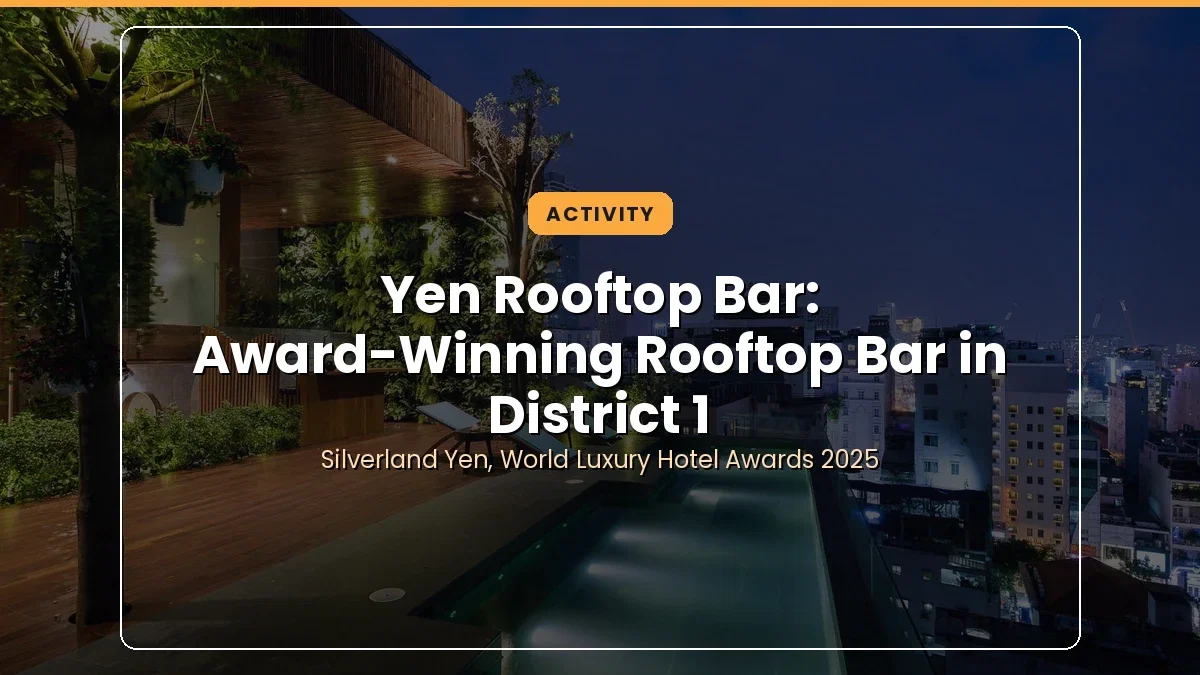
Yen Rooftop Bar: Rooftop Bar Quận 1 Đoạt Giải Quốc Tế 2025
Yen Rooftop Bar trên sân thượng Silverland Yen đoạt giải Luxury Rooftop View Hotel in South East Asia 2025. Giờ...
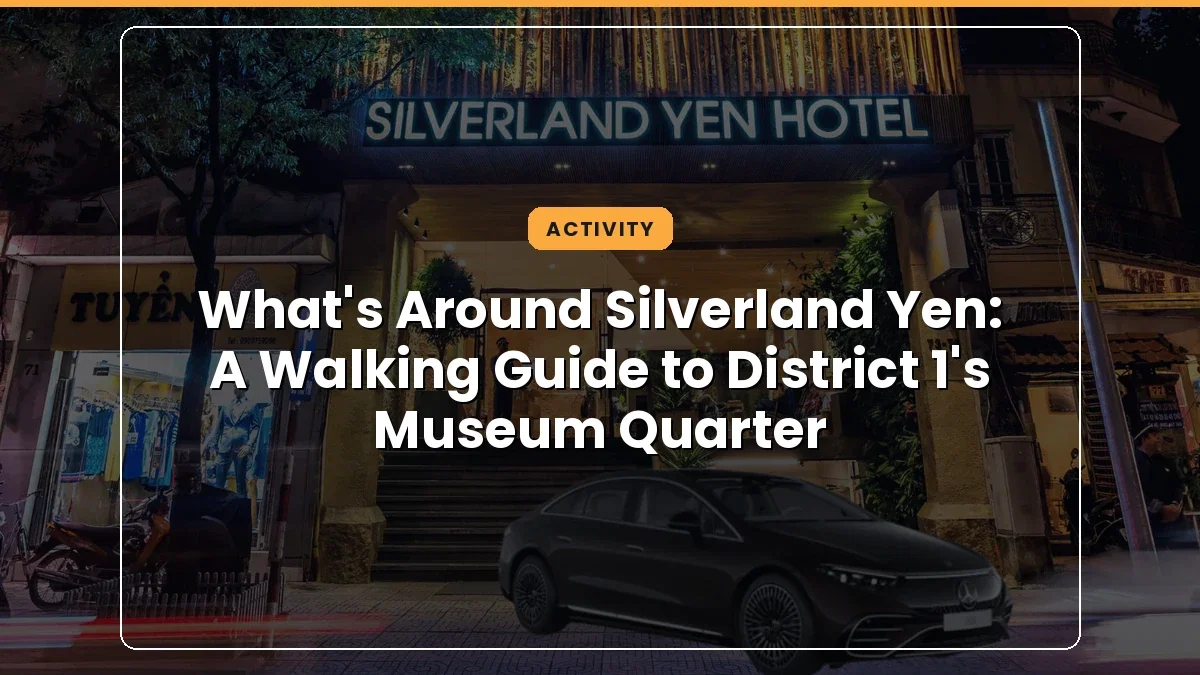
Xung quanh Silverland Yen có gì: Cẩm nang đi bộ khu bảo tàng Quận 1
Silverland Yen nằm ở số 73-75 đường Thủ Khoa Huân, trên một đoạn phố ngắn thuộc phường Bến Thành. Khách...
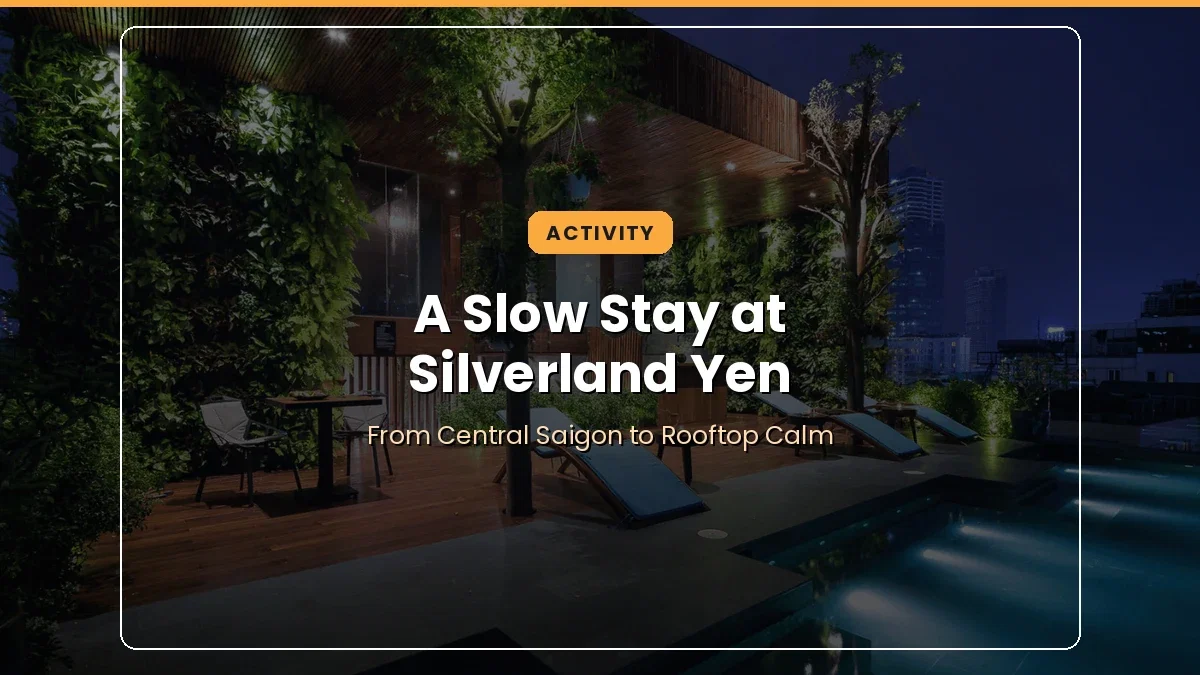
Từ trung tâm Sài Gòn lên sân thượng yên tĩnh: Kỳ nghỉ chậm tại Silverland Yen
Silverland Yen là khách sạn boutique 4 sao với 63 phòng tại 73-75 Thủ Khoa Huân, Phường Bến Thành, TP....