



What Makes a Boutique Business Hotel Different
21/08/2026Search “boutique hotel vs chain hotel” and you’ll get the same five words in some order every time: personalized, unique, intimate, authentic, curated. None of it is wrong exactly. It’s just vague enough to apply to almost any small hotel with nice lighting. Ask someone who’s actually stayed at both what the boutique business hotel […]
Search “boutique hotel vs chain hotel” and you’ll get the same five words in some order every time: personalized, unique, intimate, authentic, curated. None of it is wrong exactly. It’s just vague enough to apply to almost any small hotel with nice lighting. Ask someone who’s actually stayed at both what the boutique business hotel difference feels like day to day, and the answer is usually smaller and more specific than that.
Silverland Sakyo is a useful case for testing the claim, because it sits directly in Little Japan next to the exact chains it’s being compared against. As a boutique business hotel in Ho Chi Minh City sitting a few blocks from those same towers, it faces the same neighborhood, the same business travelers, the same 30-minute run to Tan Son Nhat. What separates a 76-room hotel from a 400-room chain isn’t a mood board. It’s a handful of operational choices that only make sense at a certain size, applied consistently enough that a guest notices without being told to.
The Room Count Changes What’s Actually Possible
Seventy-six rooms sounds like a marketing number until you think about what it does to a front desk shift. At a large chain property, a guest is one of several hundred people checking in that week, and the system is built to move them through efficiently: same script, same room categories, same recovery process if something goes wrong. That’s not a criticism. It’s the correct design for that scale.
At 76 rooms across six categories, the math works differently. Staff can plausibly know which room a returning guest liked last time, or that the guest in 412 asked for extra pillows on Tuesday. That’s not a special program bolted onto the operation. It’s just what’s mechanically achievable when the guest list is short enough to hold in your head, the kind of small hotel personalized service that doesn’t need a CRM to feel real. This is the part most “boutique vs chain” articles wave at without saying it plainly: personalization at this size isn’t a philosophy, it’s arithmetic. Fewer guests, more attention per guest, no software required.
Wabi-Sabi Isn’t a Design Theme, It’s a Set of Rules
Here’s where Sakyo departs from the generic boutique playbook, which usually means “local art on the walls” and stops there. Sakyo runs on wabi-sabi, the Japanese idea that beauty sits in imperfection and restraint rather than polish. That’s not a lobby aesthetic. It shows up as actual constraints on what the hotel will and won’t do.
A chain hotel adds a rooftop pool because pools test well in guest surveys. Sakyo’s rooftop has a 20-square-meter jacuzzi with two temperature zones instead, because the wabi-sabi logic prioritizes a specific physical effect (the hot-cold reset) over a bigger, more photogenic water feature. The Karesansui dry rock garden in the lobby isn’t decoration either. It’s an actual zen garden, the kind built from raked gravel and placed stones, sitting where a chain hotel would put a sculpture bought from a hospitality supplier. Even the six room categories reflect this: Stillness Studio and Serene Standard have no exterior window at all, an intentional design choice built around privacy and quiet rather than a view.
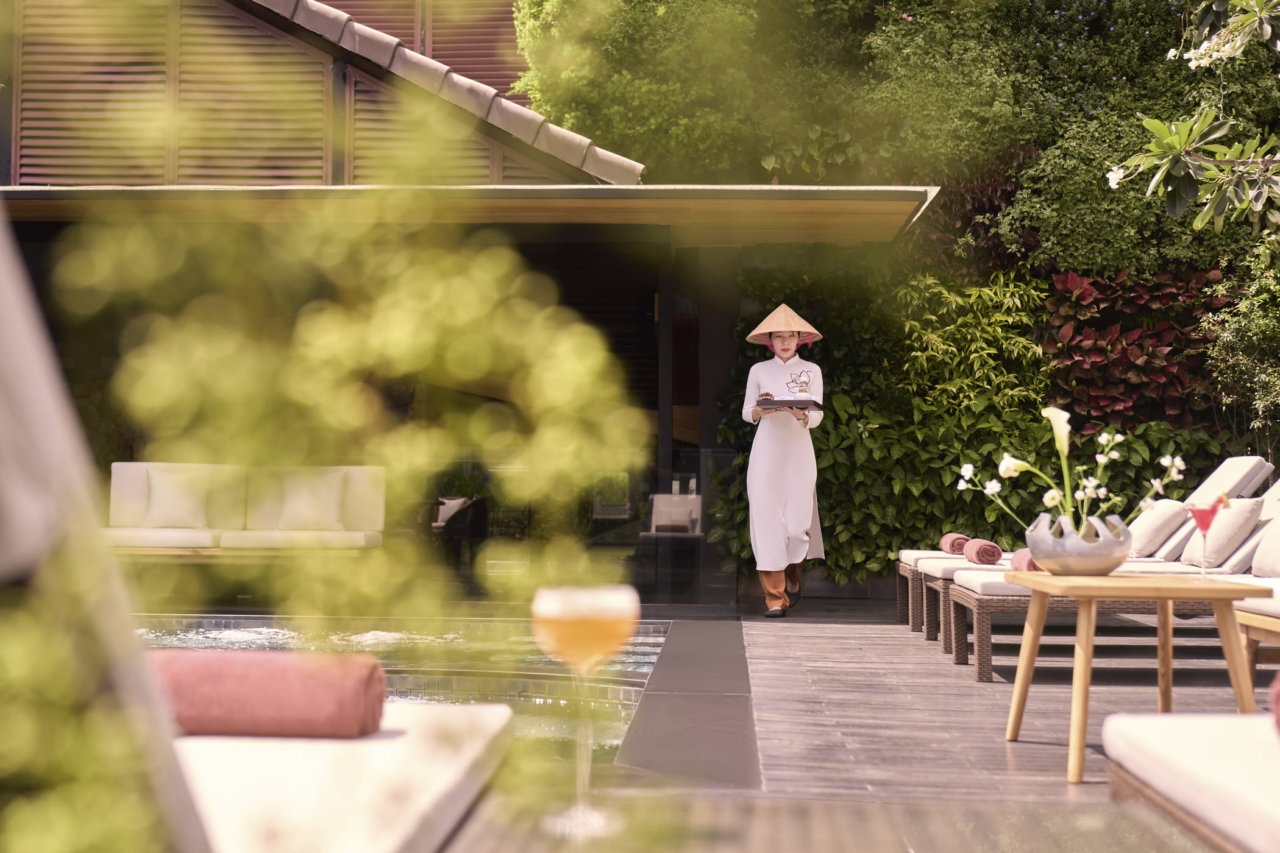
None of this is inherently better than what a chain does well. It’s just a coherent set of decisions traceable back to one philosophy, rather than a checklist of amenities assembled because competitors have them.
| What a chain hotel optimizes for | What Sakyo optimizes for |
|---|---|
| Consistency across every property in the brand | A single, specific idea of rest, applied at this one address |
| Amenities that test well broadly (pools, gyms, 24-hour everything) | Amenities chosen for a particular effect (temperature-zone jacuzzi, no-window Cocoon rooms: Stillness Studio and Serene Standard) |
| Loyalty points and predictable service scripts | Staff who can hold the entire guest list in their head |
| A brand identity that travels the same in Tokyo, Toronto, or Saigon | A hotel that only makes sense on this street, in this neighborhood |
Location Isn’t Just an Address, It’s a Daily Decision
A chain hotel picks a location for reach: near the airport, near the convention center, near enough to everything that it never has to choose a specific identity. Sakyo sits inside Japan Town, a Japanese style hotel on Lê Thánh Tôn Street in Little Japan, and that placement isn’t neutral. It commits the hotel to a specific guest, largely Japanese bleisure travelers and anyone who wants proximity to izakaya, Japanese grocers, and ramen counters that don’t show up on a general tourist map.
That commitment is also why comparing Sakyo to a downtown chain misses the point slightly. Business travelers who choose Sakyo over a bigger name nearby usually aren’t picking based on room count. They’re picking a specific five-to-seven-minute radius around Ben Thanh Market and a specific cultural register that a 300-room international brand isn’t built to hold. The wider Japan Town business hotel corridor around Lê Thánh Tôn and Thái Văn Lung has grown around exactly this logic: hotels small enough to commit to one neighborhood’s character instead of averaging across every neighborhood a chain operates in.
Where a Chain Still Wins, Honestly
It’s worth saying plainly: a chain hotel is the better choice for some trips. A company running a 200-person conference needs meeting space and room inventory no 76-room hotel can offer. A frequent flyer optimizing loyalty points has no reason to break the pattern for one trip to Saigon. Predictability has real value when a traveler has done the same trip forty times and just wants zero surprises.
The boutique business hotel case is narrower and more specific: it’s for a traveler who’s in Saigon on their own schedule, values who they see across the last four days of a trip, and would rather stay somewhere the whole hotel argues for than somewhere it merely accommodates. Sakyo’s own booking data backs this up. Japanese guests booking 14 to 40 days ahead and choosing Stillness Studio at a far higher rate than any other category aren’t picking the cheapest room. American guests averaging 3.4 nights, the longest stay length among Sakyo’s core markets, aren’t optimizing for a quick layover stop. Both patterns point to travelers making a deliberate choice, not a default one.
FAQ
What’s the real difference between a boutique hotel and a chain hotel for business travel?
The main practical difference is scale and consistency. A chain hotel delivers the same standardized experience across hundreds of locations, useful for predictability and loyalty points. A boutique hotel like Silverland Sakyo operates at a size where staff can personalize service without a program forcing it, and design choices follow one coherent philosophy instead of a broad amenity checklist.
Is a boutique hotel actually better for a short business trip?
It depends on the trip. For large conferences or maximum predictability across frequent travel, a chain hotel usually serves better. For a traveler prioritizing neighborhood character, quieter rooms, and closer attention from staff, a boutique hotel built around a specific concept, like Sakyo’s wabi-sabi philosophy, tends to deliver more of what they’re actually looking for.
What does wabi-sabi mean in a hotel context?
Wabi-sabi is a Japanese aesthetic philosophy centered on finding beauty in imperfection, simplicity, and restraint. At Silverland Sakyo, it shapes concrete choices: the Karesansui dry rock garden, the no-window Cocoon rooms (Stillness Studio and Serene Standard) built for quiet over a view, and a rooftop jacuzzi designed for a specific hot-cold effect rather than a large photogenic pool.
How many rooms does Silverland Sakyo have?
Silverland Sakyo has 76 rooms across six categories, ranging from the 24-square-meter Stillness Studio to the 45-square-meter Sakyo Suite.
Where is Silverland Sakyo located?
Silverland Sakyo sits on Lê Thánh Tôn Street in Saigon’s Japan Town (Little Japan), about 5 to 7 minutes’ walk from Ben Thanh Market and roughly 30 minutes from Tan Son Nhat International Airport.
The five words that show up in every “boutique vs chain” article, personalized, unique, intimate, authentic, curated, aren’t wrong. They’re just describing the symptom instead of the cause. The cause is smaller and more mechanical: a room count low enough for staff to actually remember guests, and a single philosophy applied consistently enough that a stranger walking in on any given day would still be able to tell what kind of hotel this is.
What else?
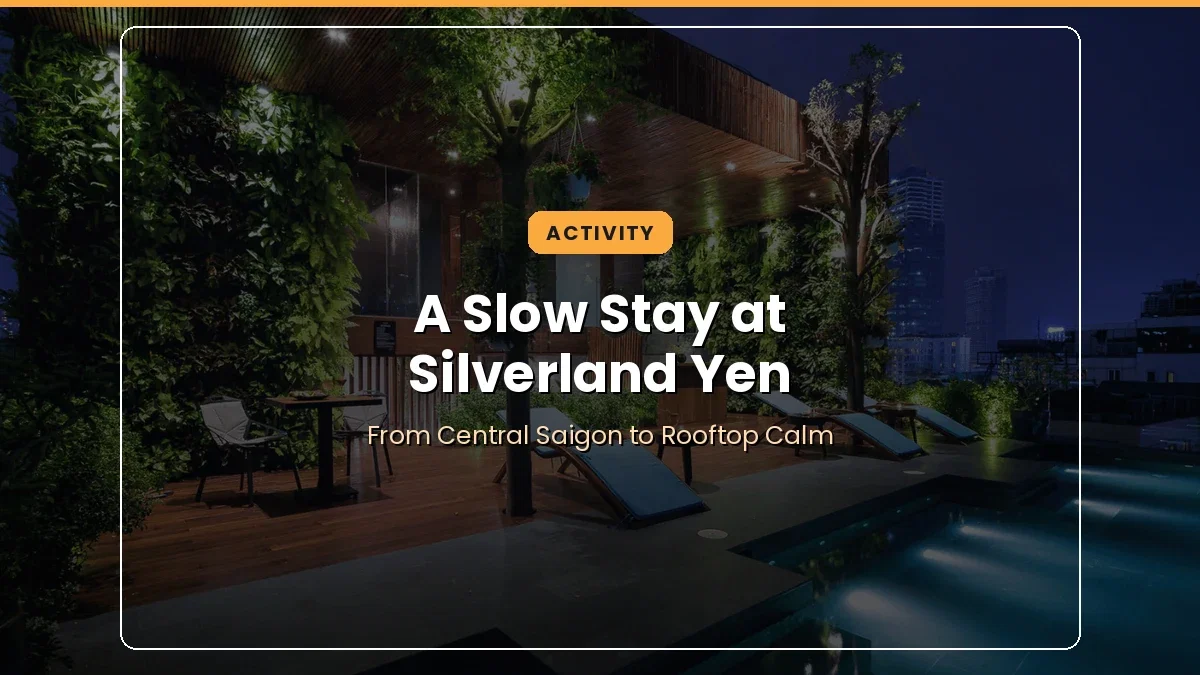
From Central Saigon to Rooftop Calm: A Slow Stay at Silverland Yen
Silverland Yen is a 4-star boutique hotel with 63 rooms at 73-75 Thu Khoa Huan Street, Ben Thanh Ward, Ho...
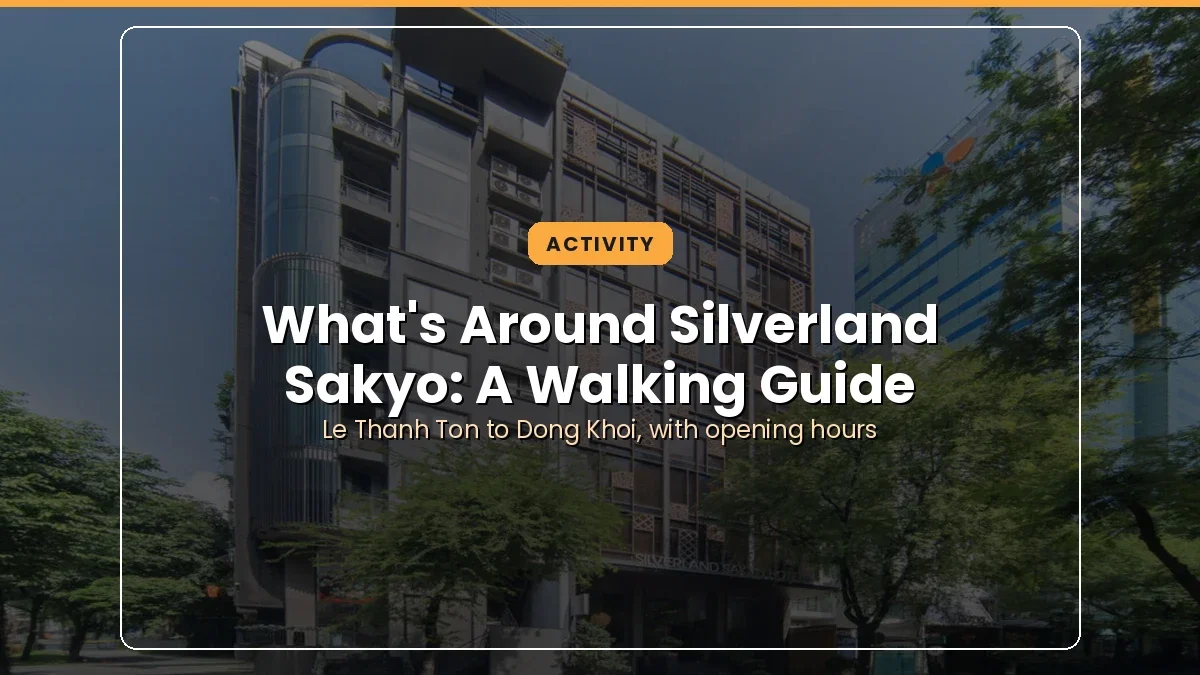
What’s Around Silverland Sakyo: A Walking Guide from Le Thanh Ton to Dong Khoi
This guide is for two kinds of travellers: those still comparing hotels in Ho Chi Minh City who want to...
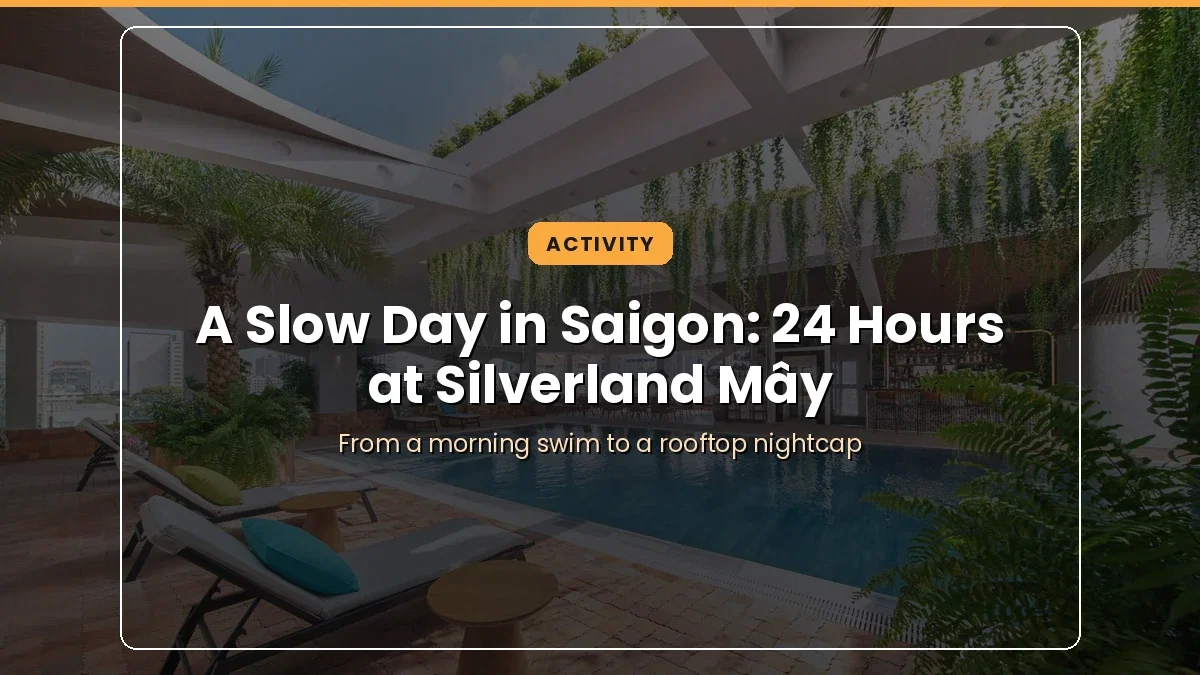
A Slow Day in Saigon: How to Spend 24 Hours at Silverland Mây
A 24-hour guide to Silverland Mây, the 4-star boutique hotel with a 150 m² rooftop pool in Saigon. See how...