



Beyond Business: A Business Hotel Designed for Rest, Balance and Better Performance in Saigon
18/08/2026A business hotel usually treats rest as leftover time. You finish the real work, and whatever’s left ove […]
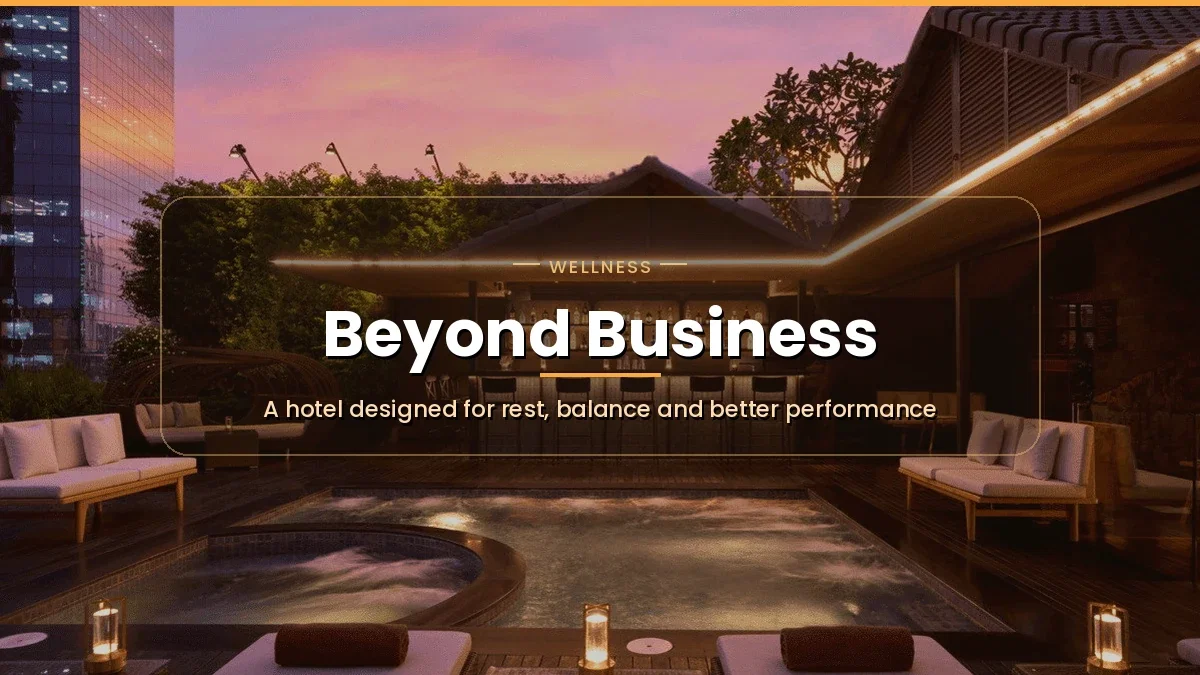
Table of Contents
A business hotel usually treats rest as leftover time. You finish the real work, and whatever’s left over, you sleep in it. Silverland Sakyo, a boutique business hotel in Ho Chi Minh City, flips that order. Sleep well, eat without rushing, get ten quiet minutes before a call, and the call itself goes better. That’s not a slogan the marketing team wrote after the fact. It’s the actual reasoning behind why the Karesansui zen garden sits where it does, and why the Stillness Studio rooms have no window at all.
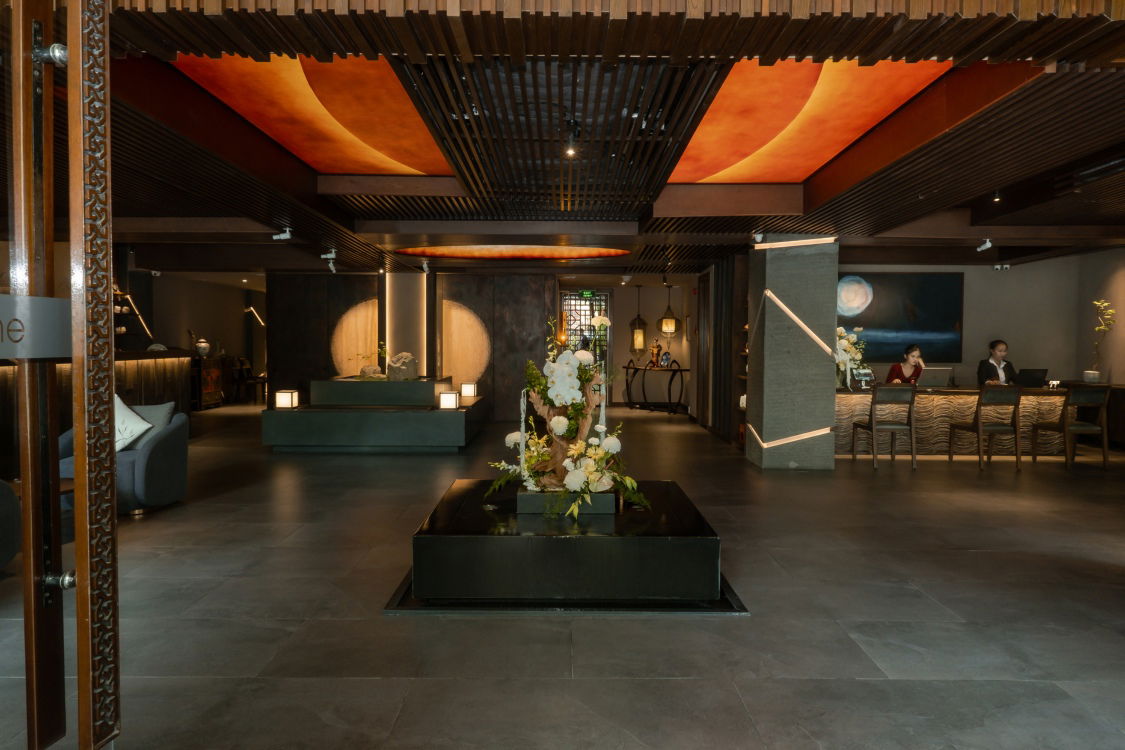
Here’s the thing about a 76-room hotel on Lê Thánh Tôn Street, in the middle of Saigon’s Little Japan: it can’t out-amenity a 400-room tower. Add a gym, call it wellness, done, that playbook belongs to somewhere with the budget for it. Sakyo took the other route. This is a business hotel designed for rest from the ground up, not wellness bolted onto a business hotel after the fact. The whole build starts from one question. What actually helps a traveler survive four days of back-to-back meetings without arriving home wrecked?
That question is also why business travelers keep choosing Sakyo over the bigger names nearby in the first place, and why the Japan Town business hotel corridor around Lê Thánh Tôn and Thái Văn Lung has become the second or third pick for Asian corporate visitors rather than their first.
What a Wellness Hotel for Business Travelers in Saigon Actually Looks Like
Soft lighting in a lobby is easy. Nobody argues rest is hard to fake. The differences that matter at this wellness hotel for business travelers in Saigon show up somewhere less photogenic: six room categories built around light and silence rather than square meters alone, two separate rooftop pool temperatures instead of one generic splash zone, a kitchen that doesn’t shut its doors at 9pm just because that’s when hotel kitchens usually do.
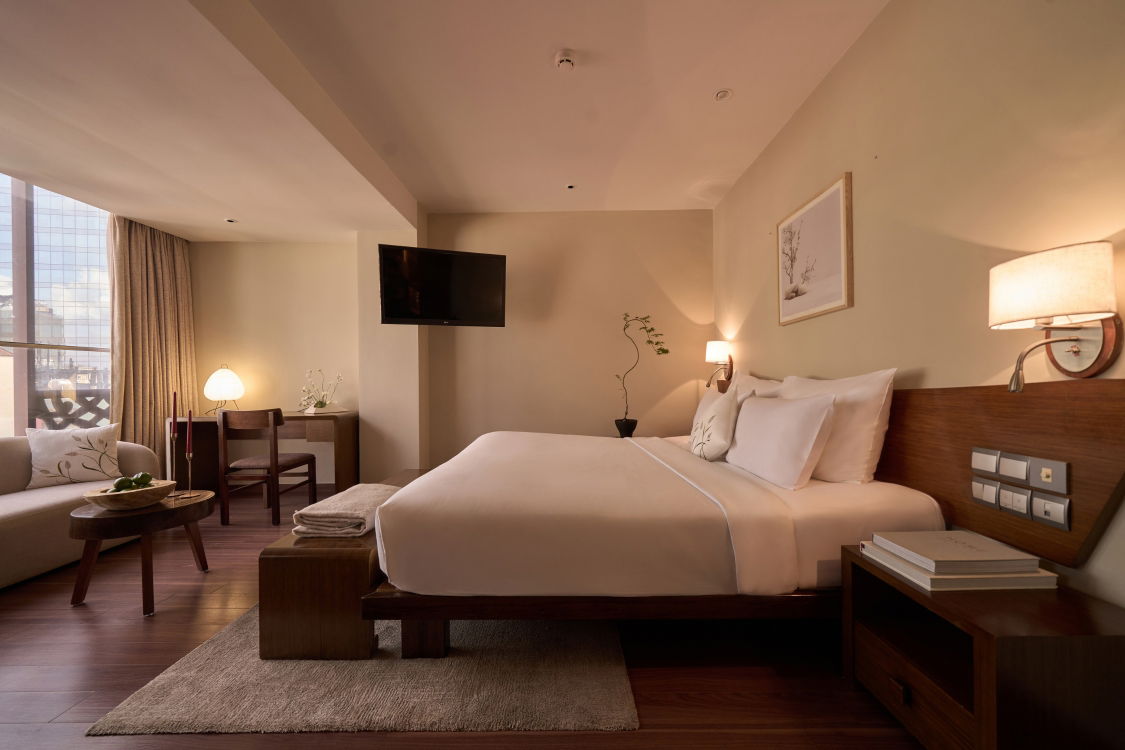
Take Stillness Studio. 24 square meters, zero exterior window. On a spec sheet that reads like a downgrade. In practice, for someone who landed on a redeye and has a client call at 9am, a room with no street noise and no morning glare is the room that actually delivers sleep, not the one that photographs best. Japanese guests book this category more than any other, 31.1% of Japan bookings according to the hotel’s own numbers, and it’s not because it’s cheap. It’s the room closest to how they define privacy. American guests go the other direction almost every time, choosing Sanctuary Executive instead: 40 square meters, floor-to-ceiling windows, more light than enclosure. Same underlying philosophy. Two completely different answers, because rest doesn’t come in one shape.
The Rooftop Isn’t There for the Photo
Eighth floor. Outdoor jacuzzi, two zones, 38°C and 18°C sitting side by side. Twenty square meters, and the hotel is upfront that it’s not trying to be a resort pool, because oversizing a jacuzzi doesn’t make it work better. What actually does the work is the temperature swing. Fifteen minutes moving hot to cold resets a body that’s spent all day in taxis and conference rooms in a way that scrolling on a phone back in your room never quite manages.
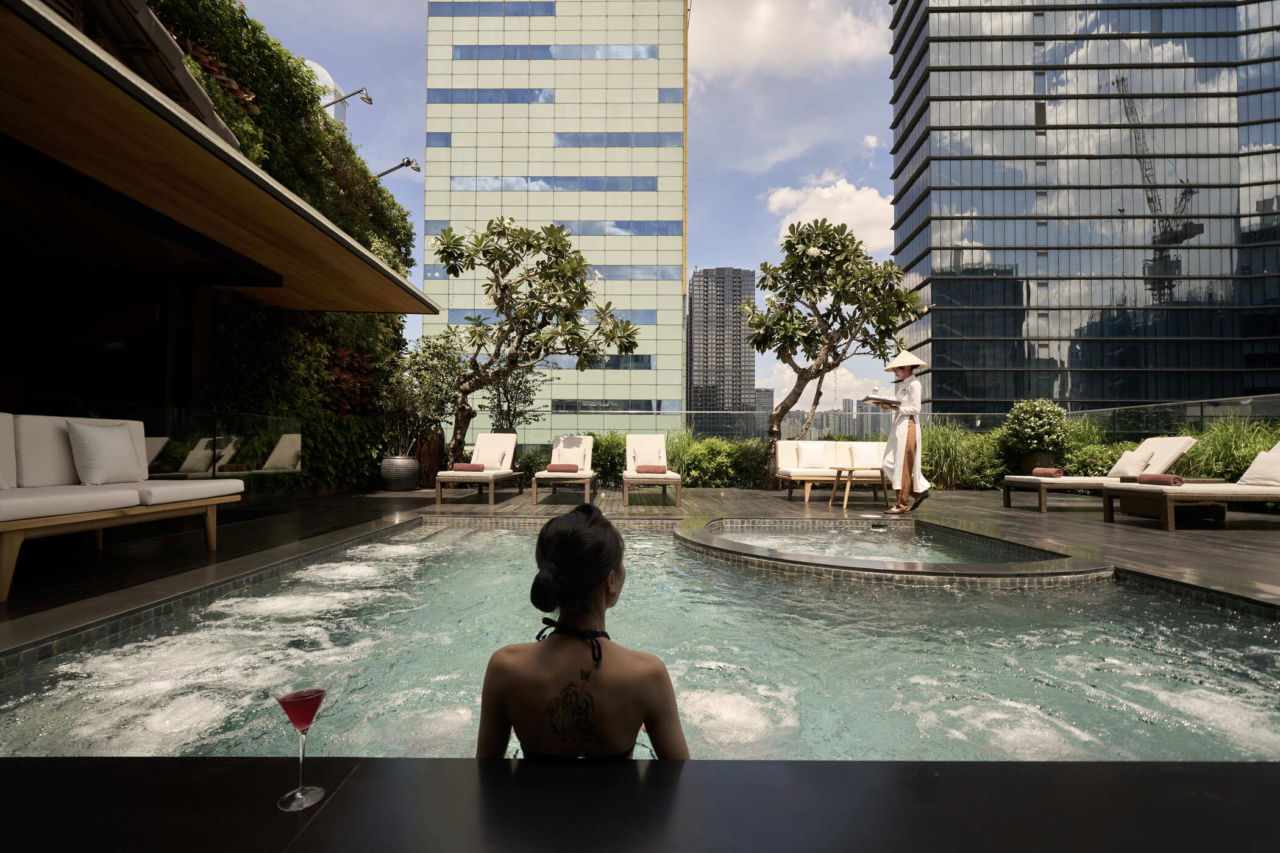
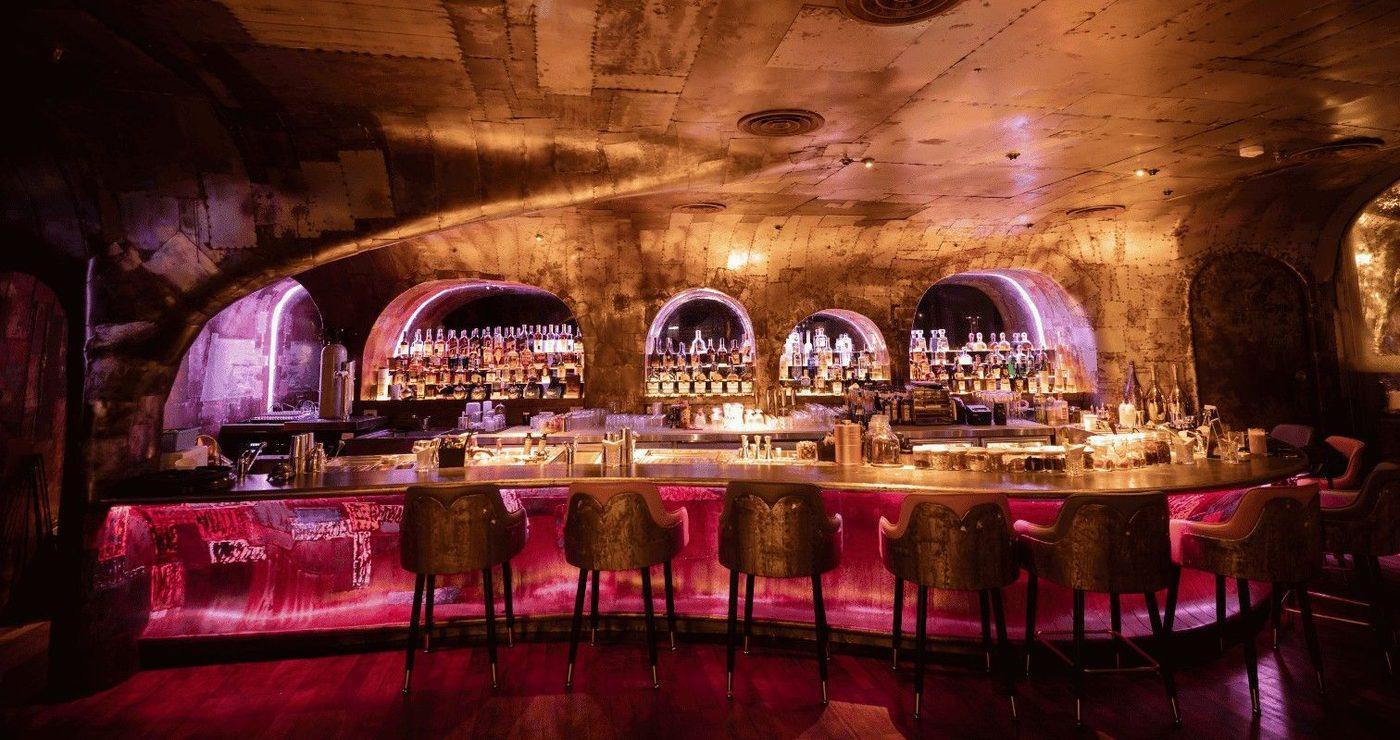
Right next to it, Oasis Saigon sits deliberately as the pause between the office towers surrounding it. Guests tend to describe it less as nightlife and more as the ten minutes before dinner where the noise of the day genuinely stops. That’s specific and repeatable, not marketing copy: the bar sits at treetop height above Lê Thánh Tôn, low enough to still feel like the street, high enough to feel apart from it.
Meals Built Around a Schedule Nobody Controls
Hareta hi (晴れた日), the all-day restaurant, takes its name from a Kishin Shinoyama photo book, roughly “a fine day.” Breakfast runs 5:30 to 10:00, which covers both a 6am airport dash and a slow start before a 10am call, and the kitchen keeps going until 22:00 for guests coming off a delayed flight or a client dinner that ran long.
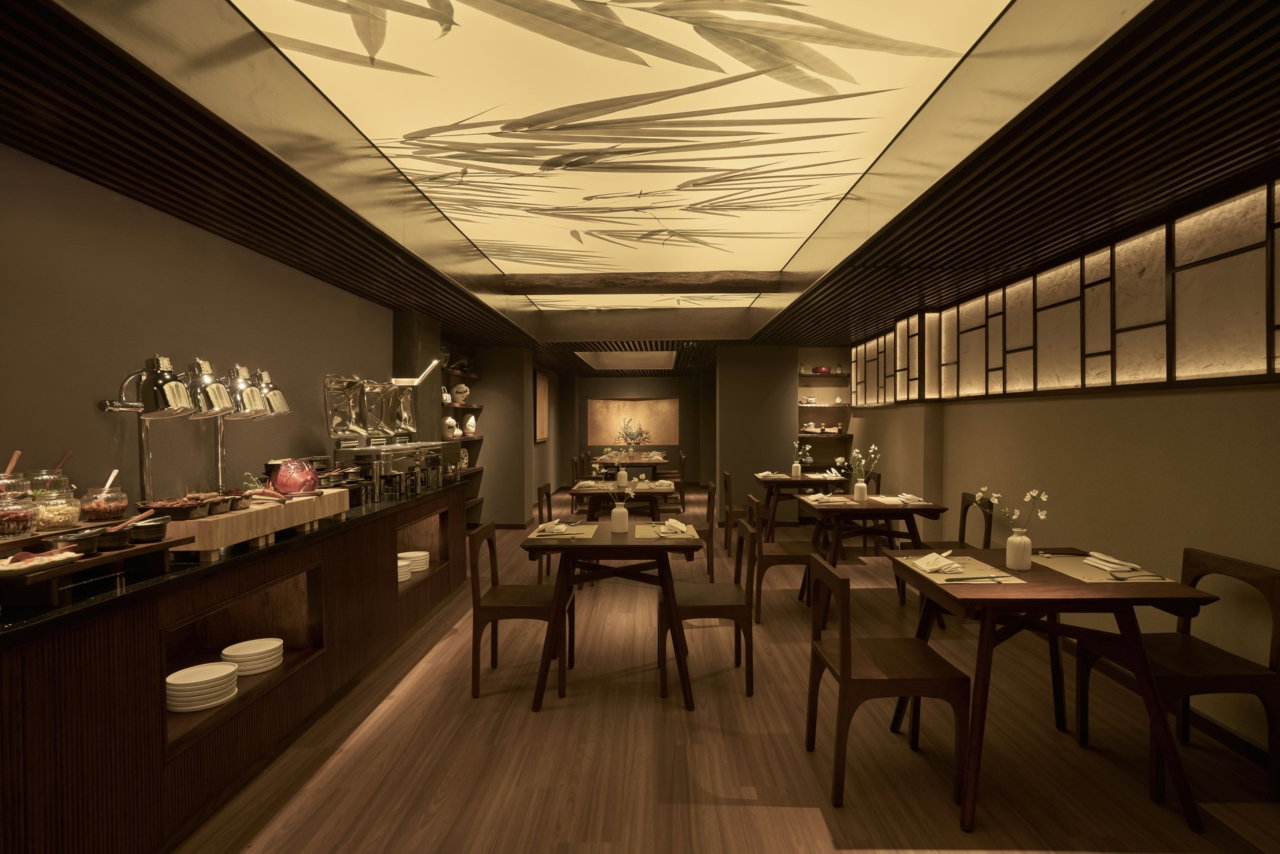
Downstairs, the lobby bar pairs afternoon tea with the Karesansui dry rock garden every single day, 14:00 to 16:00. Most hotels leave that window completely dead. It sounds like a small detail until you notice how many business trips actually fall apart right there, in the low-energy stretch between lunch and evening meetings, where a traveler either recharges properly or pushes through on caffeine and shows up to the 4pm call already running on fumes.
| Sakyo touchpoint | Standard business hotel | Why it’s different |
|---|---|---|
| Cocoon rooms (Stillness Studio, Serene Standard) | Standard city-view room | Built for sleep quality, not a view worth photographing |
| Rooftop jacuzzi, dual temperature | Single-temperature rooftop pool | Made for physical reset, not lounging |
| Daily afternoon tea by Karesansui, 14:00–16:00 | No structured afternoon offering | Fills the exact hour most business trips lose momentum |
| Hareta hi, 5:30–22:00 | Fixed breakfast/dinner hours only | Matches irregular flight and meeting schedules |
| Fitness Center, 6th floor, 5:30–22:00 | Standard gym hours | Available before early departures, after late arrivals |
The Booking Data Backs This Up
Here’s where it stops being a design story and starts being a pattern. Japanese guests, mostly bleisure, short business trips folded around a bit of personal time, plan ahead 14 to 40 days out and pick Stillness Studio most often. American guests average the longest stays of Sakyo’s core markets, 3.4 nights, and lean toward Sanctuary Executive: the room that trades enclosure for space and light. Different travelers, different rooms, same underlying decision. They’re both choosing a hotel that fits how they actually want to recover, not just wherever has an empty bed.
That distinction won’t show up on an amenity checklist. Compare hotels in District 1 by feature list and you’ll see “spa, gym, rooftop bar” on a dozen properties, Novotel Saigon Centre among them, all pitching wellness as the thing you do after the real work ends. Few of them are a Japanese style hotel in Little Japan Saigon the way Sakyo is, and that cultural grounding is part of what makes the rest-first design read as intentional rather than trendy. What a checklist can’t capture is which of those hotels actually built its daily rhythm, tea timing, kitchen hours, room design, around what a working trip really feels like from the inside, instead of around what looks good in a listing photo.
A Quiet Hotel in District 1 for Work Trips, Not Just Sightseeing
Rest isn’t only what happens behind the hotel’s own door. Lê Thánh Tôn sits inside Japan Town, the pocket of District 1 dense with izakaya, Japanese grocers, ramen counters that never make it onto a tourist map. It’s also, block for block, one of the more genuinely quiet corners of District 1 once you step off the main road, which matters more on a work trip than most itineraries admit. For a Japanese guest on a short trip, that proximity removes friction most business travel adds automatically: no hunting for familiar food after a long day, no guessing at an unfamiliar menu at 9pm. Ben Thanh Market and the Lê Lợi corridor sit a five to seven minute walk away, close enough that an evening walk actually feels like a break instead of one more commute.
For guests coming from further out, that same walkable radius means less time bled to traffic between meetings. Thirty minutes to Tan Son Nhat keeps a late departure from swallowing the whole evening. None of this reads as dramatic in isolation. Stack it together and it’s the difference between a trip that wears someone down by day three and one that doesn’t, whether you’re here on a two-day sales trip or a longer stretch of work.
FAQ
What makes Silverland Sakyo different from other business hotels in Ho Chi Minh City?
Silverland Sakyo treats rest as part of business performance rather than something separate from it. Room design, meal timing, and rooftop facilities are all structured around recovery, not just a standard amenity checklist.
Is Silverland Sakyo suitable for short business trips?
Yes. It sits in Little Japan on Lê Thánh Tôn Street, roughly 5 to 7 minutes’ walk from Ben Thanh Market, with breakfast from 5:30 and dinner service until 22:00 to accommodate irregular meeting schedules.
What is a Cocoon room at Silverland Sakyo?
Cocoon refers to the Stillness Studio and Serene Standard categories, both without an exterior window, designed for privacy and undisturbed sleep. It’s the most-booked category among Japanese guests.
Does Silverland Sakyo have wellness facilities for business travelers?
There’s a rooftop jacuzzi with separate 38°C and 18°C zones on the 8th floor, a fitness center on the 6th floor open 5:30 to 22:00, and daily afternoon tea beside the Karesansui zen garden from 14:00 to 16:00.
How far is Silverland Sakyo from Ben Thanh Market and the airport?
About 5 to 7 minutes’ walk from Ben Thanh Market and roughly 30 minutes from Tan Son Nhat International Airport by car.
Is the rooftop jacuzzi at Silverland Sakyo the same as a swimming pool?
No. It’s a 20 square meter outdoor jacuzzi with two temperature zones built for a quick physical reset, not for swimming laps.
A business trip doesn’t actually end when the last meeting does. It ends when the traveler is rested enough to do the same thing again tomorrow without dreading it. That’s the gap most hotels leave wide open. It’s the one Sakyo was built to close.
他にもありますか。
Booking.com Traveller Review Awards 2026: A Recognition from Millions of Travellers for Silverland Hospitality
Silverland Hospitali...