



Why Business Travelers Choose Silverland Sakyo hotel in Saigon’s Little Japan
08/07/2026Three meetings, one dinner, a flight out at 6am. That is what a lot of Ho Chi Minh City trips look like now, a […]
Three meetings, one dinner, a flight out at 6am. That is what a lot of Ho Chi Minh City trips look like now, and nobody has the bandwidth left in the day to gamble on a hotel room. If you’re searching for a hotel for business travelers in Saigon’s Little Japan, the shortlist is smaller than it looks: somewhere between the airport pickup and the first pitch deck, a surprising number of corporate guests end up at the same address, 10A-10B-10C Le Thanh Ton Street, a 76-room boutique hotel called Silverland Sakyo, sitting in the part of District 1 everyone locally just calls Little Japan.
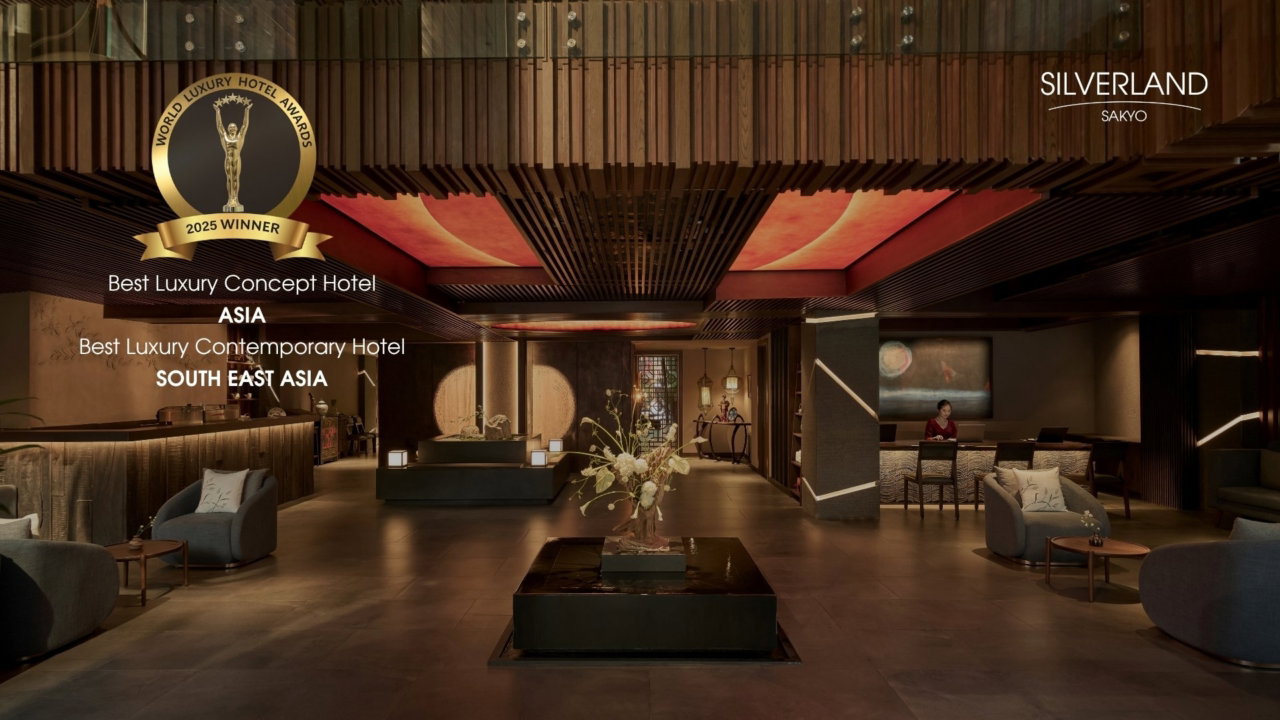
Reviewers who search for a boutique hotel Ho Chi Minh City for business travel tend to land here for the same reason: it’s small enough to feel considered, large enough to have real amenities, and it never pretends to be something bigger than it is.
The Room People Actually Book When They’re Working
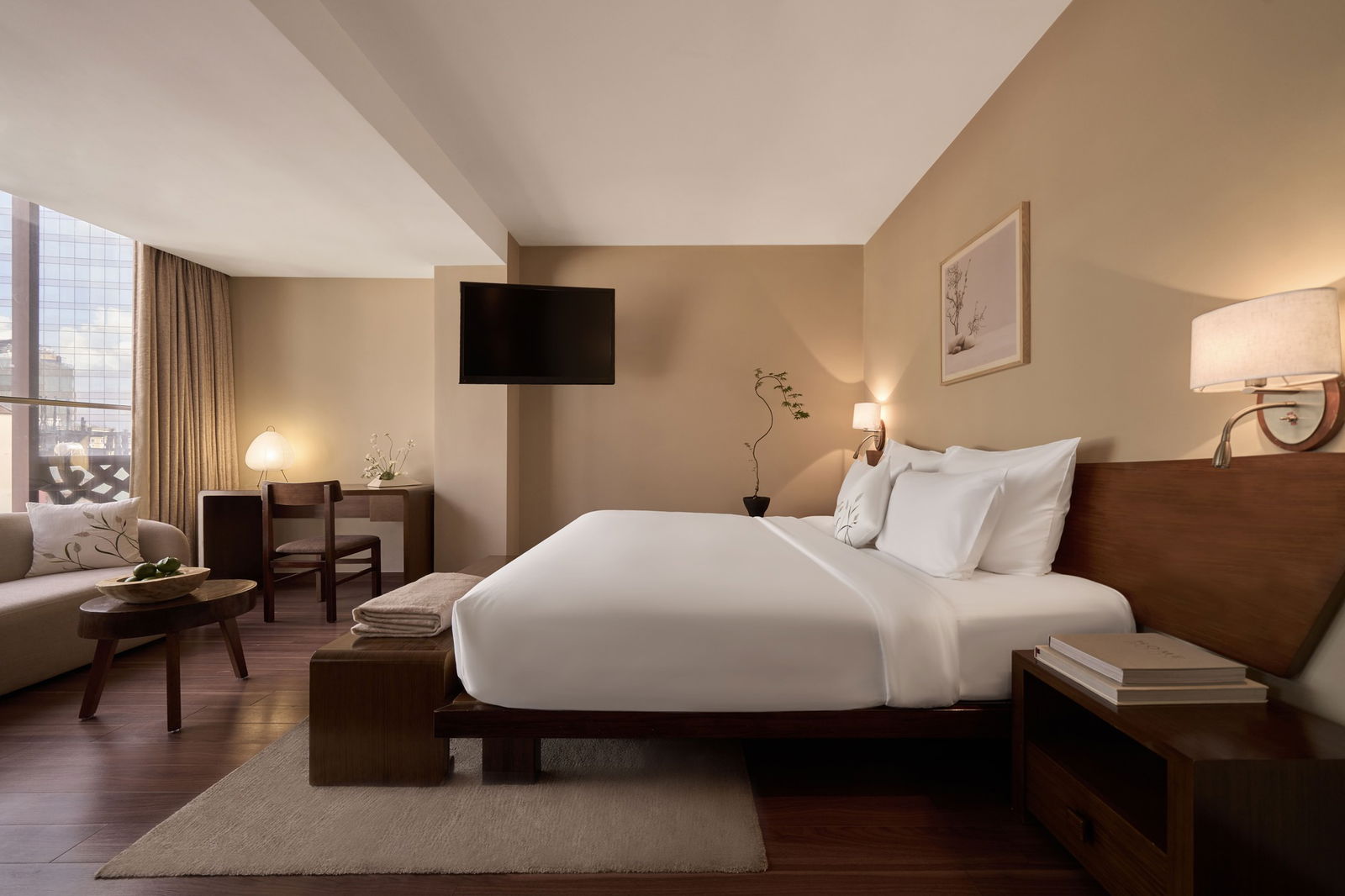
Ask which room sells itself at this boutique hotel and the answer isn’t close. The Sanctuary Executive room at Silverland Sakyo hotel, 40 square metres, floor-to-ceiling windows, takes 41.5% of all US bookings and a startling 63% of Australian ones. That’s not a price thing. Rooms this size at this rate aren’t rare in Saigon.
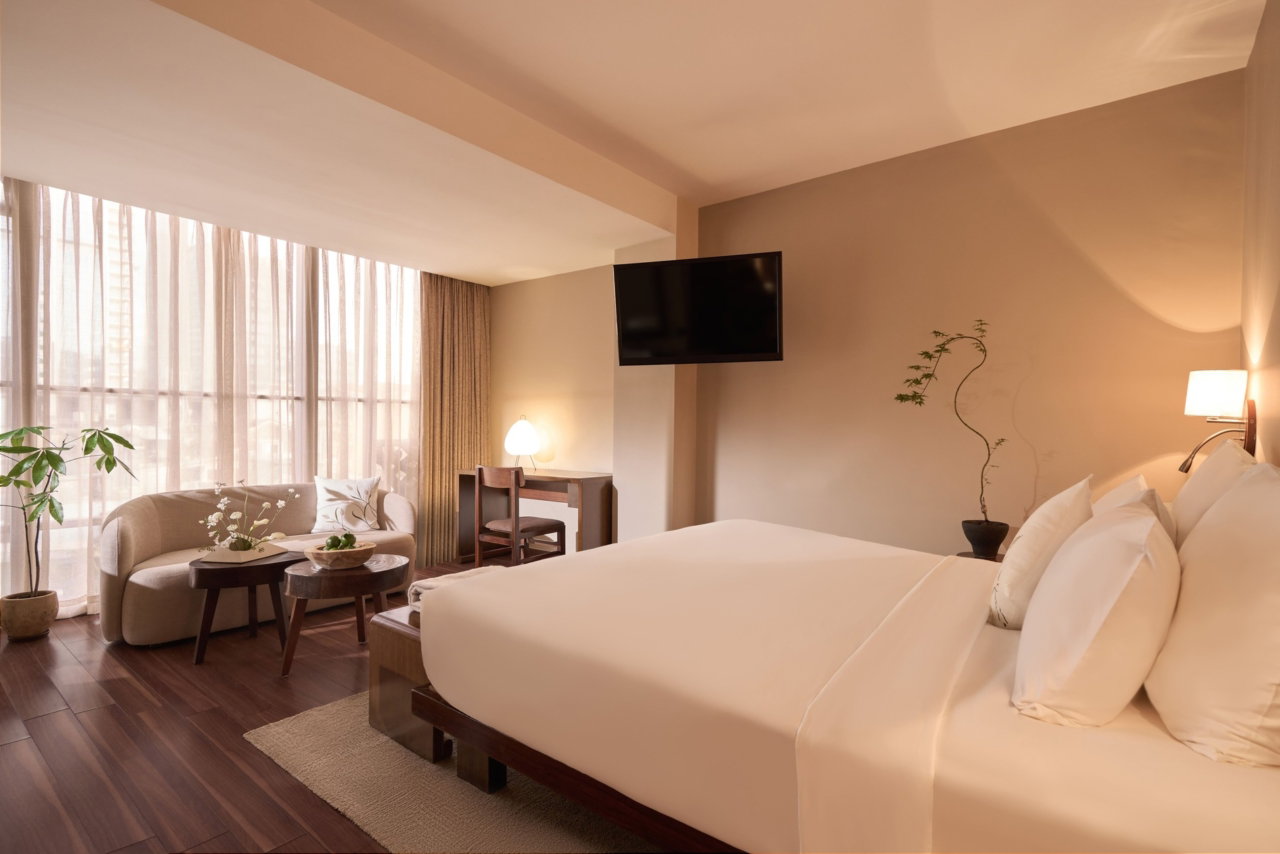
What is rare: a desk that actually gets daylight on it past 9am. Try writing an email at 7:45am in a room with a 60cm slit window and see how long you last. Sanctuary Executive skips that problem entirely, high floor, glass wall, enough floor space to spread out a laptop, a printout, and a room-service tray without playing furniture Tetris. For someone running calls across three time zones before breakfast, that’s not an amenity. It’s the difference between a functional morning and a bad one.
Why a Corporate Hotel on Le Thanh Ton Works Differently
Le Thanh Ton has been the Japanese business district’s unofficial main street for longer than most hotels on it have existed, izakaya, ramen counters, Japanese grocers, the kind of density you don’t get elsewhere in the city. This corporate hotel Le Thanh Ton address sits directly on that street. Ben Thanh Market and the Le Loi strip are five to seven minutes on foot. The airport is roughly half an hour by car, traffic depending, and in Saigon, traffic is always depending.
For Japanese guests running meetings in their second or third language all day, that street matters more than it sounds like it should. Recognizable food. Familiar signage. A five-minute walk back to something that feels less foreign after nine hours of feeling exactly that. Search for a Japanese hotel Saigon business trip guests actually recommend to each other, and this address keeps coming up, not a chain property three kilometres away. American and Australian guests read the same block completely differently: anyone typing “hotel near Little Japan district 1” into a search bar is usually picturing a generic strip, but what they find instead is a neighborhood with actual texture, still close enough to everything downtown to not cost them a commute. Same five hundred metres, two entirely different reasons to book it.
The Wabi-Sabi Thing Isn’t Decoration
Sakyo runs on wabi-sabi, the idea that beauty sits in imperfection and restraint rather than polish. In the lobby that means a Karesansui dry rock garden, and free afternoon tea from 2 to 4pm every single day, Satoko Ishimine’s orchestral pieces playing low in the background. Small ritual. But for someone who just came out of back-to-back meetings, twenty quiet minutes that are already built into the building beats a spa menu they’ll never have time to use.
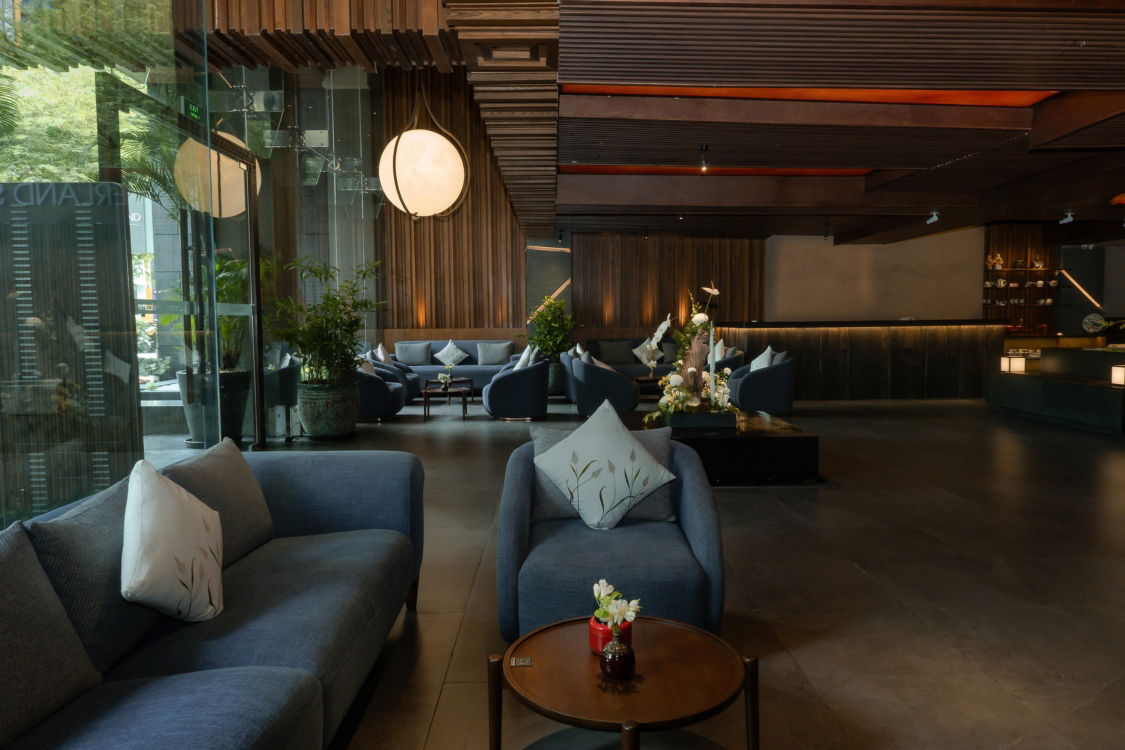
Guests who’ve stayed at branded hotels in the same price range tend to comment on what’s missing here, no lobby wall of televisions, no oversized logo above the front desk. That absence is deliberate, and for a certain kind of traveler it reads as more trustworthy than a hotel trying hard to look expensive.
There’s a rooftop layer too, and it’s not positioned as a tourist add-on. Oasis Saigon Bar sits on the 8th floor, open 10am to 11pm. Next to it, an outdoor jacuzzi (not a pool, a genuine jacuzzi split between a 38°C hot side and an 18°C cold plunge) and KL Spa on the same floor. An hour up there before dinner, after being in meetings since eight in the morning, functions as an actual reset. Not something squeezed in because the itinerary said “leisure.”
Beyond Sanctuary Executive: What the Other Five Rooms Are For
Anyone comparing a Sanctuary Executive room Silverland Sakyo hotel listing against the other five categories should know upfront that the split isn’t about budget. It’s about how each market actually uses a hotel room.
| Room type | Size | Best suited for |
|---|---|---|
| Stillness Studio | 24 m² | No exterior window, favored by Japanese guests (31.1% of Japan bookings) who prioritize quiet and privacy over a view |
| Serene Standard | 30 m² | Simple, calm design for shorter single-purpose stays |
| Symphony Deluxe | 30 m² | Natural light through interior-facing windows, quiet corridor position |
| Solace Premier | 30 m² | Wood-toned interiors, king bed, second-most booked category for US guests (25.7%) |
| Sanctuary Executive | 40 m² | Floor-to-ceiling windows, city views, top choice for US (41.5%) and Australian (63%) business travelers |
| Sakyo Suite | 45 m² | Private balcony, skyline view, used by guests extending a business trip into a few personal days |
Here’s the detail worth sitting with. Most markets treat a windowless room as a discount tier, something you tolerate for a cheaper rate and nothing more. Japanese guests at Sakyo do the opposite: Stillness Studio is their single most-booked room, 31.1% of Japan bookings, chosen specifically for the privacy and the way it shuts out street noise. Nobody’s settling for it. They’re picking it on purpose. That’s wabi-sabi in practice rather than in a brochure, the room as a cocoon, not a downgrade.
So What’s the Catch
Every hotel for business travelers is a trade-off somewhere, and Sakyo’s is fairly easy to name. Seventy-six rooms. No dedicated business center, no conference wing, nothing built for a hundred-person offsite with a projector and a boardroom table. If that’s the trip, look elsewhere. What this boutique hotel actually solves is the far more common version of business travel: one to three people, a handful of meetings scattered across the day, a need for a room that works as a quiet office at 7am and somewhere worth coming back to at 9pm.
Silverland Sakyo hotel vs a Standard Business Hotel
| Factor | Standard business hotel (District 1) | Silverland Sakyo hotel |
|---|---|---|
| Room size for business stays | Often 22-28 m² standard | 40 m² Sanctuary Executive with floor-to-ceiling windows |
| Location character | Generic hotel district | Directly on Le Thanh Ton, in Little Japan |
| Evening wind-down | Usually requires leaving the hotel | Rooftop bar, jacuzzi, and spa on-site, 8th floor |
| Design language | Branded, standardized chain interiors | Wabi-sabi minimalism, Karesansui garden, no visual clutter |
| Daily ritual | None built in | Free afternoon tea, 2-4pm, by the Zen garden |
Frequently Asked Questions
Is Silverland Sakyo hotel good for solo business travel?
Yes. Silverland Sakyo hotel is well suited to solo business travelers, particularly those staying two to four nights. The Sanctuary Executive room provides a genuine work surface with natural daylight, and the hotel’s location on Le Thanh Ton Street keeps most District 1 meeting points within a five-to-ten-minute walk or short ride.
What room type do most business travelers book at Silverland Sakyo hotel?
Most business travelers from the US and Australia book the Sanctuary Executive room, a 40-square-metre category with floor-to-ceiling windows and city views. It accounts for 41.5% of US bookings and 63% of Australian bookings, the highest share of any room category in both markets.
Why do Japanese business travelers often choose the windowless Stillness Studio room?
Japanese guests choose the Stillness Studio, which has no exterior window, more often than any other room category at 31.1% of bookings. The preference reflects a value for privacy and insulation from street noise over a view, consistent with the hotel’s wabi-sabi design philosophy that treats the room as a quiet, enclosed retreat rather than a compromise.
How far is Silverland Sakyo from Ho Chi Minh City’s main business district?
Silverland Sakyo sits on Le Thanh Ton Street in District 1, roughly five to seven minutes on foot from Ben Thanh Market and the Le Loi corridor, and about 30 minutes by car from Tan Son Nhat International Airport. Most corporate offices and meeting venues in District 1 are within a short walk or a five-to-ten-minute taxi ride.
Does Silverland Sakyo have a workspace or business facilities?
Silverland Sakyo does not operate a dedicated business center or conference floor. Instead, its Sanctuary Executive and Sakyo Suite rooms are designed with in-room work surfaces and natural light suited to laptop work, and the hotel is best suited to individual or small-group business travelers rather than large corporate offsites.
What is the average length of stay for business travelers at Silverland Sakyo hotel?
Business travelers from the US average 3.4 nights, and Japanese guests average 2.6 nights, both consistent with a short work trip pattern rather than an extended leisure stay. Australian guests average 2.86 nights, often combining a short business stop with personal time.
One Thing Worth Checking Before You Book
If you’re a repeat traveler on this route, here’s something worth knowing. Guests booking through third-party platforms often end up paying more than the hotel’s own direct rate, a pattern that shows up clearly among Japanese travelers who plan their trips well in advance. A direct early-bird rate booked 45 to 60 days out usually closes that gap. If your dates are already set, check the hotel’s own site first. Skipping that step is basically leaving money on the table for no reason.
Closing Note
Little Japan wasn’t invented for a hotel brochure. Le Thanh Ton was the city’s Japanese business corridor long before Sakyo opened a single room on it. What the hotel adds to a street that already had its own identity is fairly specific: light on a desk by seven in the morning, quiet enough to actually sleep before an early call, a rooftop worth using at nine at night instead of scrolling a phone in a beige room somewhere. For someone stacking three cities into one work week, that short list ends up mattering more than anything printed on an amenities card.
See full room details, rates, and direct booking options on the Silverland Sakyo hotel.
他にもありますか。
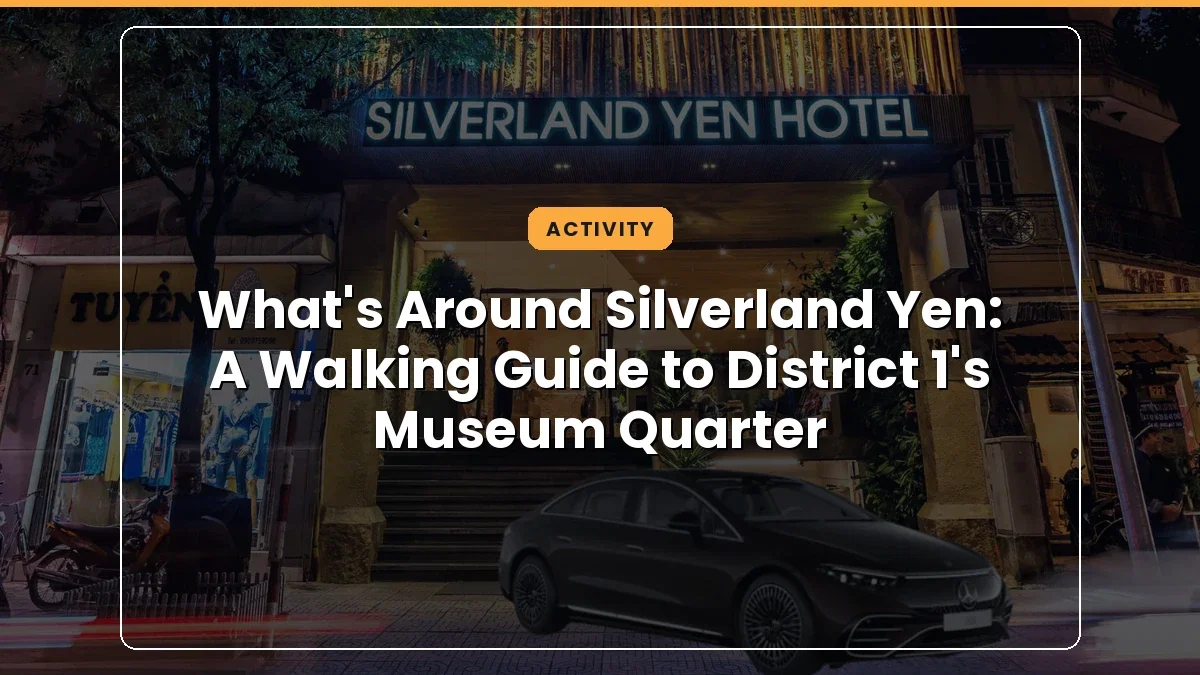
What’s Around Silverland Yen: A Walking Guide to District 1’s Museum Quarter
Silverland Yen stand...
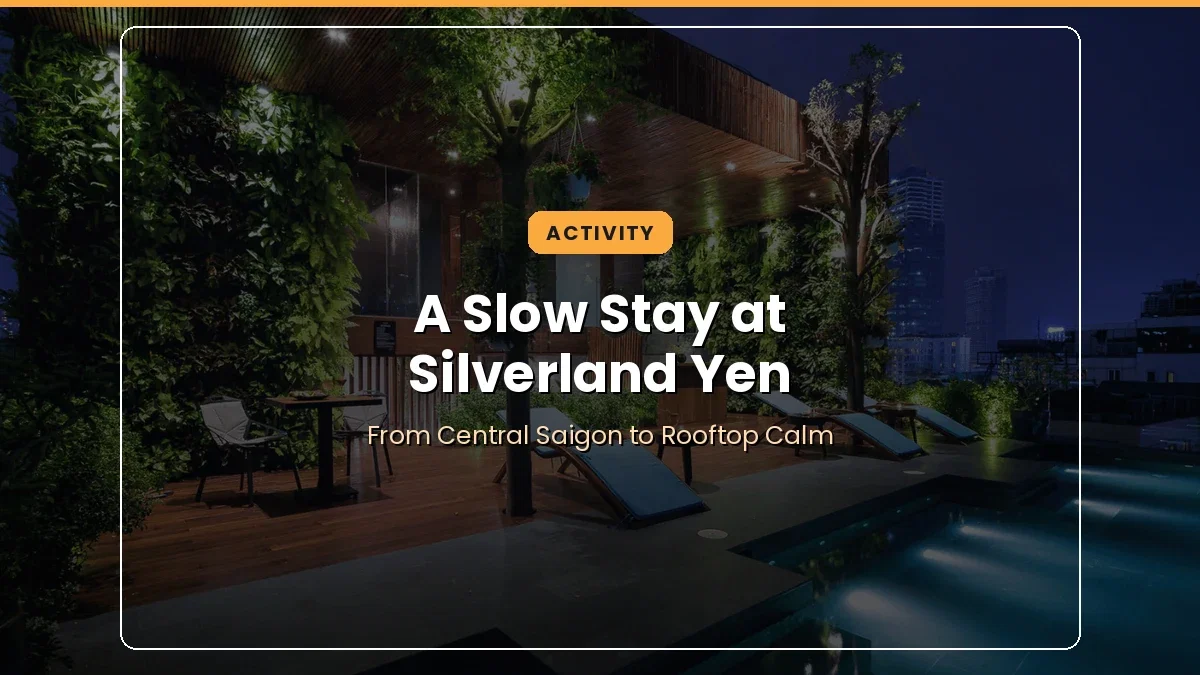
From Central Saigon to Rooftop Calm: A Slow Stay at Silverland Yen
Silverland Yen is a ...