



Why Japanese Business Travellers Choose Little Tokyo for Their Stay in Ho Chi Minh City
16/07/2026JETRO logged 576 meetings, business inquiries, and trade promotion activities between Japanese companies and Ho Chi Minh City in the first half of 2026 alone, and a large share of the travelers behind those numbers end up booking a Japanese business hotel Ho Chi Minh City property inside one specific pocket of District 1: Little […]
JETRO logged 576 meetings, business inquiries, and trade promotion activities between Japanese companies and Ho Chi Minh City in the first half of 2026 alone, and a large share of the travelers behind those numbers end up booking a Japanese business hotel Ho Chi Minh City property inside one specific pocket of District 1: Little Tokyo. The neighborhood, centered on Le Thanh Ton Street and spilling onto Thai Van Lung and Thi Sach, isn’t a tourist recreation of Japan. It grew organically over two decades as more than 300 Japanese households settled there for affordable rent and proximity to work, and the businesses that followed, ramen counters, izakayas, Japanese-run spas, now number more than 20 on Alley 15B alone.
For a business traveler flying in for a short trip rather than a holiday, that concentration changes the calculation on where to stay entirely, and it’s why so many searches for a Japanese business hotel Ho Chi Minh City trip actually resolve to this one small strip of District 1.
Why Location Matters for a Business Trip
A business trip runs on a tighter clock than a leisure one. Meetings start on time, dinners with local partners happen close to the office, and the margin for a wrong turn in traffic is thin. Staying inside Little Tokyo removes most of that friction before it starts: the neighborhood’s Japanese-run restaurants and services cluster within a five-minute walk of nearly any hotel near Little Japan Saigon, which matters more when a client dinner is scheduled for 7 p.m. sharp than it does on a leisure itinerary with room to wander.
Silverland Sakyo sits at 10A-10B-10C Le Thanh Ton Street, inside this radius rather than adjacent to it, roughly 8 kilometers and a 30-minute drive from Tan Son Nhat International Airport depending on traffic. That distance is standard for District 1 properties, but the location inside Little Tokyo itself, rather than a 10-minute taxi ride from it, is what separates a genuine Japanese business hotel Ho Chi Minh City choice from one that only markets itself as nearby.
What Makes Little Tokyo Convenient for Japanese Travellers
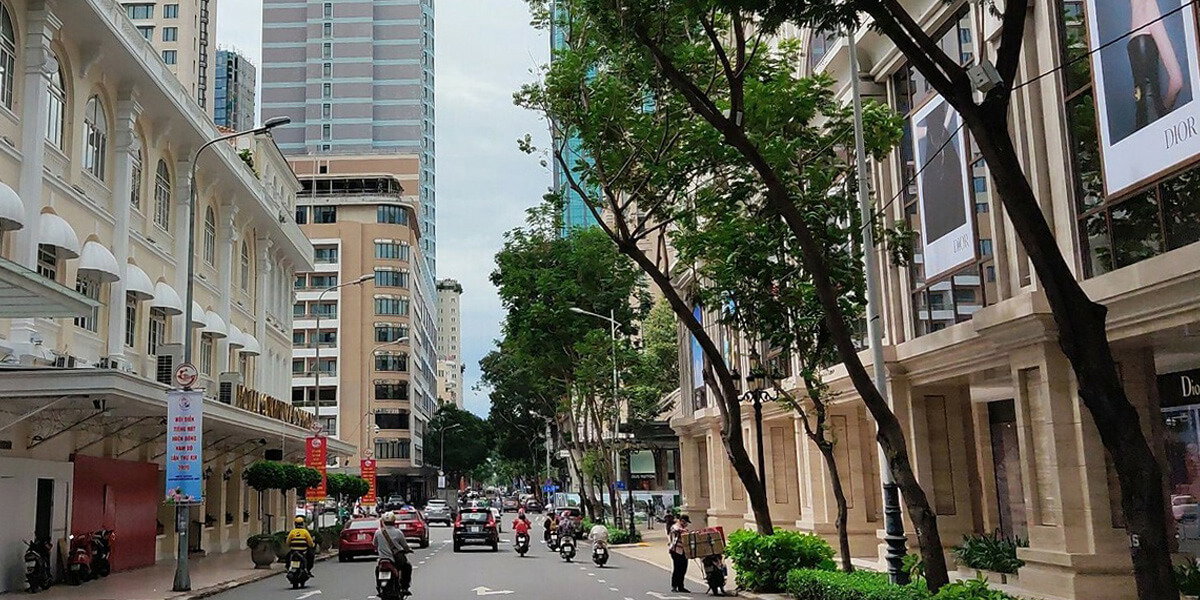
Little Tokyo’s appeal for business travelers isn’t nostalgia, it’s logistics. The area sits inside walking distance of Ben Thanh Market, Dong Khoi Street, and the broader District 1 business corridor, meaning a hotel in Little Tokyo Ho Chi Minh City isn’t a compromise between convenience and cultural comfort; it’s both at once. Booking a business hotel District 1 stay elsewhere usually means trading one of those two things away.
The Japanese Business Association of Ho Chi Minh City (JCCH) and the steady flow of JETRO-organized matching sessions and job fairs, one recent event drew more than 400 students seeking roles with Japan-linked businesses, point to a business community large enough to sustain the neighborhood’s Japanese-run restaurants, spas, and shops year-round rather than seasonally. That’s a different kind of stability than a tourist district built around visitor traffic alone.
Dining, Shopping, and Transport Around the Neighbourhood
Silverland Sakyo hotel is own dining rounds out what the surrounding neighborhood offers rather than duplicating it. Hareta Hi Restaurant runs a breakfast buffet from 5:30 to 10 a.m. and stays open for all-day dining until 10 p.m., useful for a traveler landing on a red-eye or wrapping a late meeting. Bason Café, open 7 a.m. to 10 p.m., includes a complimentary afternoon tea service from 2 to 4 p.m. daily, a detail that reads as leisure but functions as an informal meeting spot for a quick catch-up between calls.
Beyond the hotel, the wider Little Tokyo strip covers grocery needs, pharmacy items, and same-day laundry within the same five-minute radius, all run by Japanese residents or long-established Vietnamese operators used to Japanese customer expectations. For transport, the neighborhood’s position inside District 1 keeps Grab and taxi rides to any other business meeting point in the city under 20 minutes for most destinations, one more reason the area keeps outranking scattered options when travelers search for a Japanese business hotel Ho Chi Minh City stay ahead of a work trip.
Finding Calm After a Busy Working Day
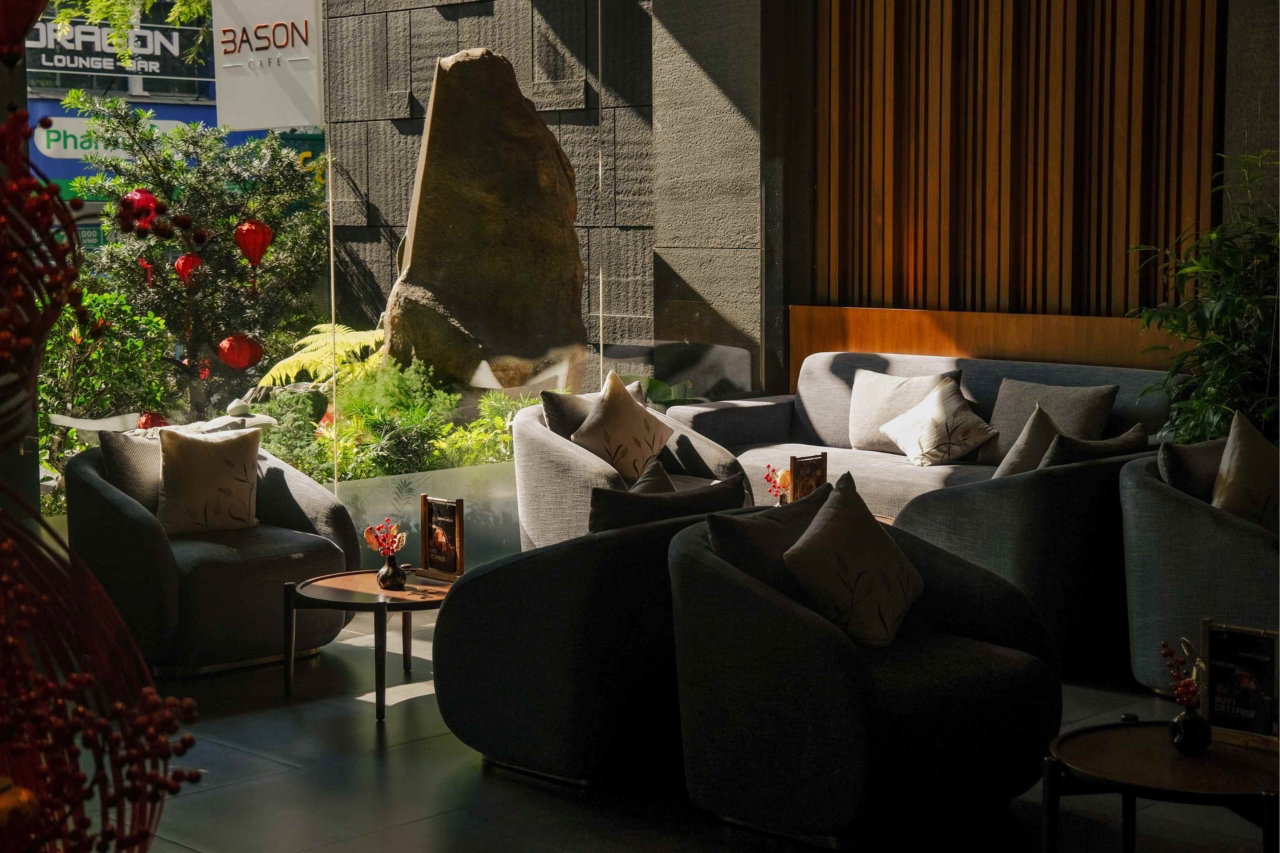
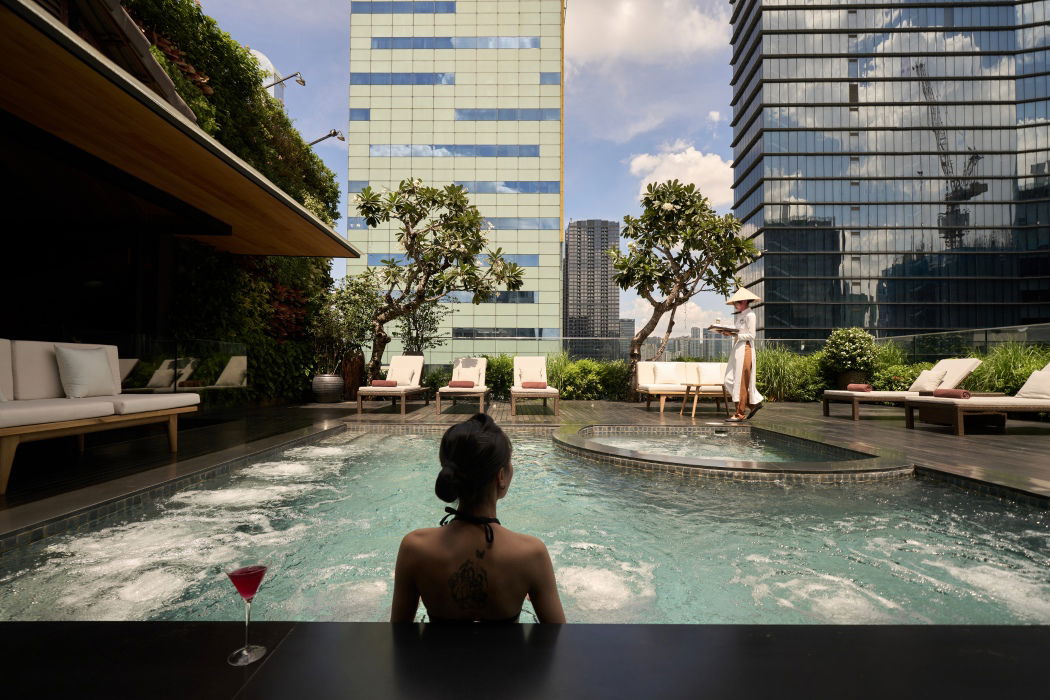
A trip built entirely around meetings still needs a decompression point, and this is where the neighborhood’s hotels start to differentiate from each other more than the surrounding streets do. Silverland Sakyo’s rooftop, the Oasis Saigon Bar, runs 10 a.m. to 10 p.m. and centers on a jacuzzi pool positioned specifically for stress relief after a full day of calls rather than as a nightlife venue. The property’s interior draws on wabi-sabi design principles, a karesansui dry garden with raked gravel, driftwood installations, and a lobby water feature meant to signal quiet and calm rather than five-star opulence for its own sake.
That’s a deliberate design choice rather than a decorative theme. A business traveler coming from Tokyo or Osaka, where minimalism and quiet are baseline expectations rather than a hotel amenity, tends to notice the difference between a hotel that performs “luxury” and one that simply doesn’t overload the senses at the end of a working day.
Why Silverland Sakyo hotel Fits the Needs of a Japanese Business Hotel Ho Chi Minh City Search
Six room categories, from the 24-square-meter Stillness Studio starting around 2.85 million VND a night to the 45-square-meter Sakyo Suite near 5.51 million VND, give a range wide enough to match a single overnight stopover against a longer project-based stay. Every category includes high-speed internet as standard rather than a paid upgrade, a detail that matters more to a traveler prepping a presentation than any view from the window does.
Complimentary gym access runs 5:30 a.m. to 10 p.m., accommodating both an early workout before a breakfast meeting and a late one after a delayed flight. Guests booking three nights or more directly through the hotel’s own website receive complimentary airport transfers, removing one more logistics decision from a trip where most of the traveler’s attention is already going elsewhere. None of these amenities individually stand out; together, they describe a property built around the actual rhythm of a business trip rather than around a leisure traveler’s checklist.
Comparison: What to Look for in a Hotel for Japanese Business Travellers
| Priority | Why it matters for business travel | What Silverland Sakyo hotel offers |
|---|---|---|
| Walking distance to Little Tokyo dining | Client dinners run on tight schedules | Inside the Le Thanh Ton corridor itself |
| Reliable high-speed internet | Presentations and video calls can’t wait on a hotel’s WiFi | Included as standard across all 6 room categories |
| Quiet, low-stimulation design | Recovery time matters after a full meeting day | Wabi-sabi interior, karesansui garden, rooftop jacuzzi |
| Airport logistics | Reduces decisions on an already packed itinerary | Complimentary transfer for 3+ night direct bookings |
| Flexible room sizing | Trips range from 1-night stopovers to multi-week projects | 24–45 sqm across 6 categories |
Read more: Why Business Travelers Choose Silverland Sakyo hotel in Saigon’s Little Japan
FAQ – Japanese Business Hotels in Little Tokyo HCMC
Why do Japanese business travellers stay in Little Tokyo instead of elsewhere in District 1?
Japanese business travellers stay in Little Tokyo because the neighborhood clusters more than 20 Japanese-run restaurants, cafés, and services within a five-minute walk, cutting down on travel time between meetings, meals, and the hotel. The area also sits inside the same District 1 radius as Ben Thanh Market and the main business corridor, so proximity to Japanese comforts doesn’t come at the cost of access to the rest of the city.
What is considered a Japanese business hotel in Ho Chi Minh City?
A Japanese business hotel in Ho Chi Minh City typically means a property inside or immediately adjacent to the Little Tokyo district on Le Thanh Ton and Thai Van Lung streets, offering reliable high-speed internet, efficient service, and either Japanese hospitality standards or Japanese-influenced design. Some properties, like Silverland Sakyo hotel, lean into wabi-sabi design philosophy rather than corporate Japanese hotel-chain branding, while still meeting the practical needs of a business stay.
How far is Little Tokyo from Tan Son Nhat International Airport?
Little Tokyo sits roughly 8 kilometers from Tan Son Nhat International Airport, translating to about a 30-minute drive depending on traffic conditions. That distance is standard for District 1 hotels generally, since the airport sits closer to the city’s outer districts than to the central business core.
Does Silverland Sakyo hotel offer airport transfers for business travellers?
Yes, Silverland Sakyo provides complimentary airport transfers for guests booking three nights or more directly through the hotel’s own website. Shorter stays or third-party bookings may not include this benefit by default, so confirming directly with the property before arrival is worth doing for a tightly scheduled trip.
What room type suits a short one-night business stopover versus a longer stay?
For a one-night stopover, the 24-square-meter Stillness Studio starting around 2.85 million VND covers the essentials without paying for space that won’t get used. Longer project-based stays tend to justify the larger Sakyo Suite at 45 square meters, closer to 5.51 million VND, which gives enough room to comfortably work from the hotel between meetings.
Is Little Tokyo only useful for Japanese travellers, or does it work for other business visitors too?
While Little Tokyo’s restaurants and services are largely Japanese-run and cater first to that community, the neighborhood’s central District 1 location, transport access, and quiet residential character make it workable for any business traveler prioritizing efficiency over nightlife. Non-Japanese business travelers frequently choose the area simply for the convenience, even without a specific interest in the Japanese dining scene.
Little Tokyo’s business travel appeal is still building rather than settled: JETRO’s meeting volume for the first half of 2026 already outpaces prior comparable periods, and new Japan-linked office openings keep adding names to an already dense business directory. A traveler booking a Japanese business hotel Ho Chi Minh City stay here next quarter should expect the neighborhood, and its hotel options, to look slightly different by the time the trip after that comes around.
What else?
Best Coffee Shops for a Business Meeting in District 1
Four Bason Cafe locations in District 1, each suited to a different kind of business meeting: easiest to find, quietest,...

A Romantic Riverside Stay in Saigon: From Room to Rooftop at Silverland Jolie
A weekend together usually starts with a modest wish: enough time to finish a conversation. To put the bags down,...
From Meetings to Wellness: A Business Traveller’s Stay at Silverland Sil
A practical guide for business travellers, including Japanese guests, at Silverland Sil on Thai Van Lung Street: location, rooms, bathtubs,...